
A Mercedes-Benz warning light, rough shift, or oil leak can put an owner in a familiar position: schedule with the dealership, call a general repair shop, or find a brand-focused independent. The right Mercedes repair options depend on the vehicle, the problem, its warranty status, and the level of diagnosis required. What should not change is the standard of care. Mercedes vehicles are engineered systems, and they need technicians, tools, parts, and procedures that respect that engineering.
For drivers across San Jose and Silicon Valley, the decision is rarely only about the lowest estimate. It is about getting a clear answer, avoiding unnecessary work, and leaving with confidence that the repair was completed correctly the first time.
Your Main Mercedes Repair Options
Most owners will choose among dealership service, a general independent repair shop, or a Mercedes-focused independent specialist. Each can make sense in the right situation, but they are not interchangeable.
The Mercedes-Benz Dealership
A dealership is often the natural choice for a brand-new vehicle, warranty repair, recall campaign, or issue that requires a manufacturer authorization. Dealers have direct access to factory programs and can perform work covered by the vehicle’s new-car or certified pre-owned warranty. For certain software updates, warranty claims, and recall-related repairs, that access can be especially useful.
The trade-off is that dealership service is commonly the highest-cost option. The service experience can also feel less personal, particularly when a vehicle is older or when the owner wants to discuss repair priorities rather than approve a broad package of recommended work. That does not mean dealership work is poor quality. It means owners should ask for a detailed explanation of what is urgent, what can be monitored, and why each repair is being recommended.
A General Repair Shop
A reputable general automotive shop may be a reasonable fit for basic work on some vehicles, such as tire service, wiper replacement, or a simple battery installation. However, routine-looking Mercedes service can involve model-specific specifications, electronic service resets, special procedures, and diagnostic steps that are easy to overlook without Mercedes experience.
For example, an oil service is not simply an oil change. The correct oil approval, filter quality, oil level procedure, maintenance reset, and inspection items all matter. Brake work may require electronic parking brake service functions. A suspension concern may involve air suspension, adaptive damping, ride-height calibration, or a fault that has nothing to do with the part that appears worn.
General shops can be capable, but the owner should ask direct questions: Do they regularly work on Mercedes-Benz vehicles? Do they have Mercedes-capable diagnostic equipment? Are they using OEM-quality parts and the proper fluids? Can they explain the findings beyond a generic fault-code printout?
A Mercedes-Focused Independent Specialist
For many out-of-warranty Mercedes owners, a dedicated independent specialist offers the strongest balance of expertise, value, and personal service. A shop that works exclusively or primarily on Mercedes-Benz vehicles sees the same engine families, transmissions, chassis systems, electrical faults, and maintenance patterns every day. That repeat exposure matters.
A Mercedes specialist should have factory-trained or deeply experienced technicians, genuine diagnostic capabilities, and access to OEM parts and fluids. Just as important, the team should be willing to explain what they found in practical terms. A trustworthy advisor distinguishes between a safety concern that needs immediate attention, a repair that should be planned soon, and a condition worth watching at the next service.
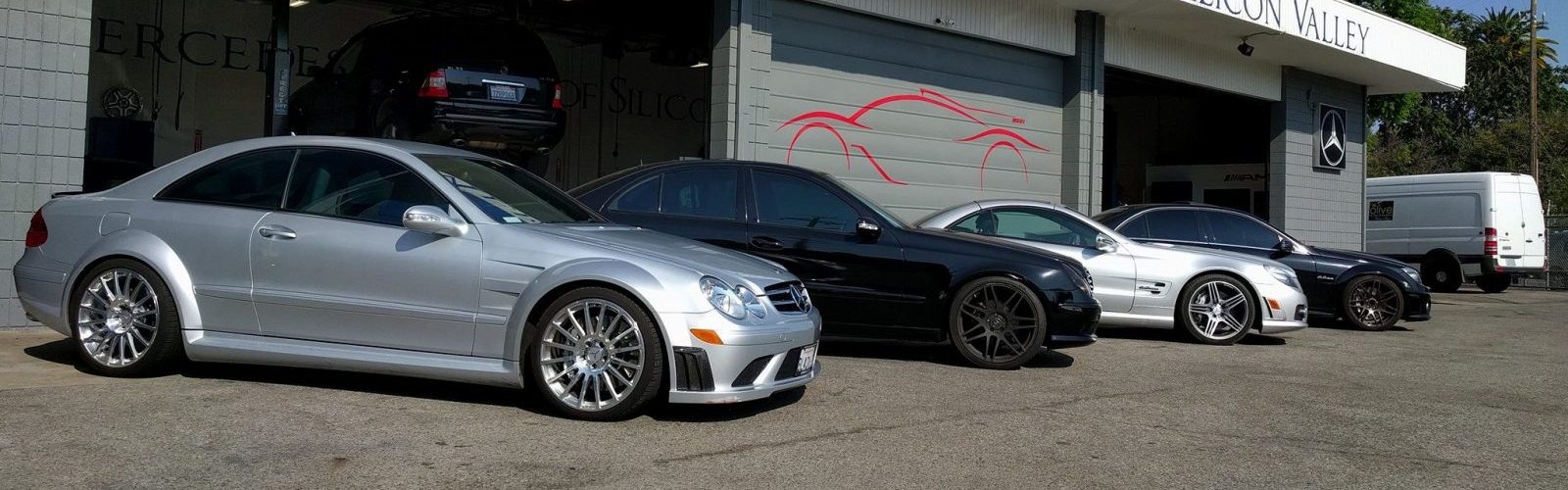
Mercedes Service of Silicon Valley is built around that specialist model: focused Mercedes expertise, advanced diagnostics, and a more direct relationship with the people caring for your vehicle.
How to Choose Between Mercedes Repair Options
The best choice begins with the type of work your vehicle needs. Warranty status comes first. If the repair is covered under a factory warranty, extended warranty, or recall, the dealership may be the most logical starting point. Review the coverage before authorizing outside work, especially for major components such as the engine, transmission, hybrid system, or infotainment system.
For scheduled maintenance and out-of-warranty repairs, look beyond the shop’s location or advertised labor rate. The true cost of service includes diagnostic accuracy, parts quality, proper installation, calibration, and whether the repair solves the underlying issue. A lower initial estimate loses its value if the wrong component is replaced or the same warning light returns a week later.
Ask whether the shop uses original equipment manufacturer parts, OEM-equivalent parts from established suppliers, or lower-cost aftermarket alternatives. There is no single answer for every repair. Certain non-critical items may have quality aftermarket choices, while sensors, ignition components, cooling-system parts, electronic modules, and safety-related components often call for OEM parts or known original suppliers. A good shop will explain the options rather than quietly substitute parts based only on price.
Diagnostics Matter More Than the Warning Light
Modern Mercedes-Benz vehicles can store dozens of control-module faults. A dashboard warning light is a symptom, not a diagnosis. Reading a code is only the beginning of the process.
Consider a check engine light related to a fuel-air mixture. The cause could be a vacuum leak, a failing sensor, an ignition issue, a fuel delivery problem, carbon buildup, or a software-related concern. Replacing the component named in a generic code description may not correct the condition. Proper diagnosis includes guided testing, live data, service information, inspection, and technician experience with known Mercedes failure patterns.
The same applies to chassis and safety systems. ABS, ESP, Distronic, blind-spot assist, PRE-SAFE, and air suspension warnings can require specialized scanning, calibration, and verification after repairs. These systems affect how the vehicle drives and protects its occupants. They are not areas for guesswork.
When comparing estimates, ask whether the diagnostic charge includes a defined testing process and a written explanation of findings. Clear diagnostics may cost more than a quick scan, but they can prevent expensive parts-swapping.
Maintenance Is a Repair Option, Too
The most cost-conscious Mercedes repair strategy is often preventive maintenance performed on schedule and tailored to the vehicle’s condition. Waiting until a minor leak becomes low oil pressure, or until worn brake pads damage rotors, usually creates a larger bill and more downtime.
Factory maintenance intervals are an important starting point, but Silicon Valley driving conditions can change what a vehicle needs. Stop-and-go commuting, short trips, high summer temperatures, steep grades, and long periods of sitting can be hard on fluids, batteries, tires, and cooling systems. An experienced Mercedes technician can help separate meaningful preventive work from services that are not yet necessary.
Pay attention to early signs: a new vibration, delayed transmission engagement, coolant odor, uneven tire wear, intermittent electrical messages, or a suspension that sits lower after parking. Addressing these concerns early gives the shop more room to diagnose the root cause before a secondary failure develops.
Special Considerations for AMG, Diesel, Hybrid, and Sprinter Models
Some Mercedes models deserve an even narrower level of expertise. AMG vehicles have higher-output engines, performance braking systems, and calibration-sensitive components. They may also benefit from performance-oriented maintenance planning that considers how the car is actually driven, not just its mileage.
Diesel Mercedes models need technicians familiar with emissions systems, AdBlue components, particulate filters, and fuel-system diagnostics. Hybrid and electric Mercedes vehicles introduce high-voltage safety procedures and specialized system knowledge. Sprinters, whether used for business, travel, or fleet work, need dependable turnaround and an understanding of the additional load placed on brakes, suspension, cooling, and driveline components.
These vehicles can still be excellent candidates for independent service, provided the shop has the right equipment, training, and experience for that specific platform.
What a Transparent Repair Experience Looks Like
Trust is built before the wrench turns. A quality Mercedes shop should listen to the concern, document the symptoms, perform appropriate testing, and contact you before moving forward with additional work. The estimate should separate required repairs from recommended maintenance whenever possible.
You should also expect an explanation of the parts being used, the warranty on parts and labor, and any calibration or programming needed after the repair. If a shop cannot explain why a repair is necessary in language you understand, ask more questions. A professional technician or service advisor will welcome them.
The right shop is not simply the one that says yes to every repair. It is the one that protects your vehicle’s safety, reliability, and long-term value while respecting your budget and priorities. Choose Mercedes repair options based on proven specialization, honest communication, and a plan that makes sense for the way you intend to enjoy your car.