
A Mercedes that drops overnight in one corner, rides harsh on the freeway, or flashes a suspension warning on the dash is usually telling you the same thing: something in the air suspension system is no longer holding pressure or responding correctly. Mercedes air suspension problems rarely stay minor for long. What begins as a slow leak or an overworked compressor can turn into uneven tire wear, poor handling, and a much more expensive repair if it is ignored.
For many owners, the frustration is not just the symptom. It is the uncertainty. One shop says you need everything. Another says to wait. The truth is that Mercedes air suspension systems are sophisticated, model-specific, and very diagnosable when you know the platform well. The key is understanding how the system fails and catching the problem before one bad component takes others with it.
What the Mercedes air suspension system actually does
Mercedes has used several versions of air suspension, including AIRMATIC and more advanced adaptive systems, across sedans, SUVs, and AMG models. At the most basic level, the system replaces traditional steel springs with air struts or air springs, then uses a compressor, valve block, ride height sensors, and control modules to manage vehicle height and ride quality.
That setup is a big part of what gives many Mercedes models their composed, planted feel. It allows the car to stay level under load, adapt to road conditions, and in some vehicles change ride height for comfort, performance, or clearance. When everything is working properly, it feels effortless. When it is not, the car can feel surprisingly rough, unstable, or uneven.
The most common Mercedes air suspension problems
The most common issue is an air leak. Usually that leak develops in an aging air strut, an air spring bladder, or one of the connecting lines or fittings. Rubber components dry out over time, especially in vehicles that see years of heat cycles, road debris, and regular daily driving. A small leak may only show up after the vehicle sits overnight. A larger one can cause one corner or even the entire vehicle to sag quickly.
The compressor is another frequent failure point. In many cases, the compressor is not the original cause – it becomes the victim. If the system has a leak, the compressor has to run more often to maintain ride height. That extra duty cycle overheats the unit, wears it out, and eventually triggers faults or leaves the vehicle unable to raise itself properly.
Valve blocks can also fail. These components control how air is distributed through the system. If a valve sticks internally or leaks, the suspension may rise or lower unevenly, or the vehicle may not respond correctly to ride height commands.
Ride height sensors and electrical faults matter too. Mercedes suspension systems rely on accurate input. A faulty sensor, damaged wiring, weak relay, or control module issue can create symptoms that look mechanical even when the hardware is still in decent condition. That is why guessing gets expensive on these cars.
Symptoms owners should not ignore
A Mercedes with air suspension problems usually gives warning signs before it completely gives up. One of the most obvious is a vehicle that sits lower on one side after parking. Another is a compressor that seems to run for an unusually long time at startup.
You may also notice a stiffer ride than normal, especially if the system can no longer regulate damping and height as intended. In some cases the front or rear end may feel floaty, bouncy, or unsettled over dips. Drivers sometimes describe it as the car feeling heavy and brittle at the same time.
Dashboard messages are another clear clue. Depending on the model, you may see warnings related to AIRMATIC, ride control, or vehicle level. Even if the car still drives, those messages should not be brushed off. Mercedes systems often store valuable fault data before the condition becomes severe.
Uneven tire wear can also be part of the story. If the suspension height is off, alignment angles change. Left alone, what started as a suspension leak can quietly shorten tire life and affect braking and stability.
Why proper diagnosis matters
This is where Mercedes ownership can get frustrating if the vehicle ends up in the wrong hands. Air suspension systems are not repaired well by replacing parts based on internet symptoms alone. A sagging rear end does not automatically mean both rear bags need replacement. A warning light does not automatically mean the compressor is bad.
A proper diagnosis usually starts with a scan of the control systems using Mercedes-capable diagnostic equipment, followed by ride height evaluation, pressure testing, leak detection, and electrical checks. Sometimes the issue is straightforward. Sometimes there are stacked failures, especially on older vehicles where a slow leak has already damaged the compressor.
The difference matters because the repair strategy should match the actual condition of the system. If one front strut is leaking and the compressor output is still healthy, that repair path is different from a car with multiple leaks, compressor weakness, and contamination in the valve block. Good diagnosis saves money because it prevents both under-repair and over-repair.
Repair or replace everything at once?
This depends on age, mileage, and which part of the system has failed. There is no honest one-size-fits-all answer.
If a single component has failed on a relatively well-kept vehicle and the rest of the system tests well, a targeted repair can make sense. On the other hand, if the car is on original air struts at high mileage and one has already ruptured, it is reasonable to inspect the others with a more cautious eye. Components of similar age tend to wear on a similar timeline.
The same logic applies to the compressor. If it has been overworked by a long-term leak, replacing only the leaking strut may not be enough. A weakened compressor can come back as the next problem. That is why experienced Mercedes technicians look at system health, not just the loudest symptom.
For budget-conscious owners, this is often the most useful part of the conversation. The goal should not be to sell the biggest job. The goal should be to prioritize what is necessary now, explain what may be coming later, and avoid doubling labor or repeating diagnostics unnecessarily.
OEM-quality parts matter more than many owners realize
With Mercedes suspension systems, part quality has a direct effect on ride quality, longevity, and calibration. Cheap aftermarket air suspension components may fit, but they do not always perform like the original equipment. That can show up as noise, inconsistent ride height, poor damping behavior, or a much shorter service life.
For owners who plan to keep the car, OEM or OEM-quality parts are usually the better value. The upfront number may be higher, but the result is often a more correct repair and fewer return issues. On a Mercedes, especially one driven daily around Silicon Valley traffic and freeway miles, that difference is noticeable.
Can you keep driving with Mercedes air suspension problems?
Sometimes you can, but that does not mean you should for long. If the car is slightly low after sitting but raises normally, you may still be able to drive it to a qualified shop. But if the suspension is severely collapsed, the compressor runs constantly, or the car displays a warning and limits ride height, continuing to drive can cause more damage.
A compressor that runs nonstop can burn itself out. A vehicle sitting too low can affect tire clearance, alignment, and control. In extreme cases, drivability and safety are compromised. This is one of those systems where early attention usually costs less than waiting for a complete failure.
What Mercedes owners should expect from a good repair experience
You should expect a clear explanation of what failed, what testing confirmed it, and whether any related components are at risk. You should also expect recommendations that fit the vehicle’s condition, not a generic script.
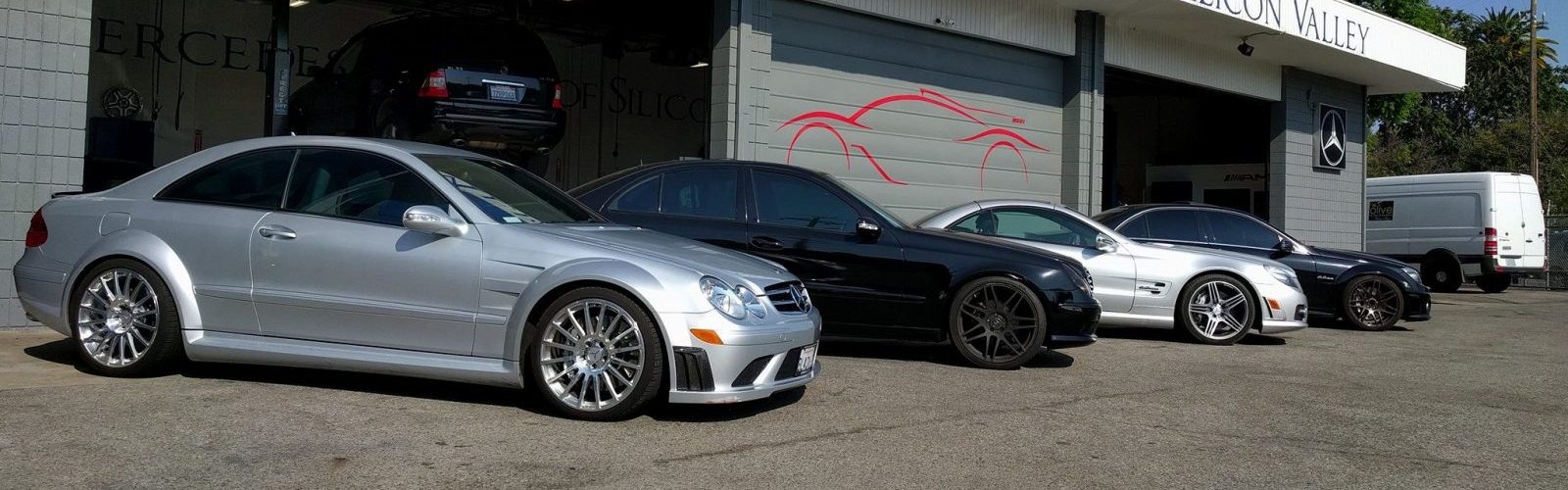
At a specialized Mercedes shop, that usually means factory-trained technicians, proper diagnostic tools, and familiarity with the patterns these systems follow across different chassis. Mercedes Service of Silicon Valley sees this balance every day – preserving ride quality and performance without pushing repairs a vehicle does not actually need.
That matters because suspension work is not just about making a warning light disappear. It is about restoring the way the vehicle was engineered to drive.
If your Mercedes is sitting unevenly, riding harder than usual, or showing suspension warnings, the smart move is to have it checked before a small leak becomes a larger repair. Catching the issue early gives you more options, better parts planning, and a much better chance of fixing the problem once and fixing it right.