
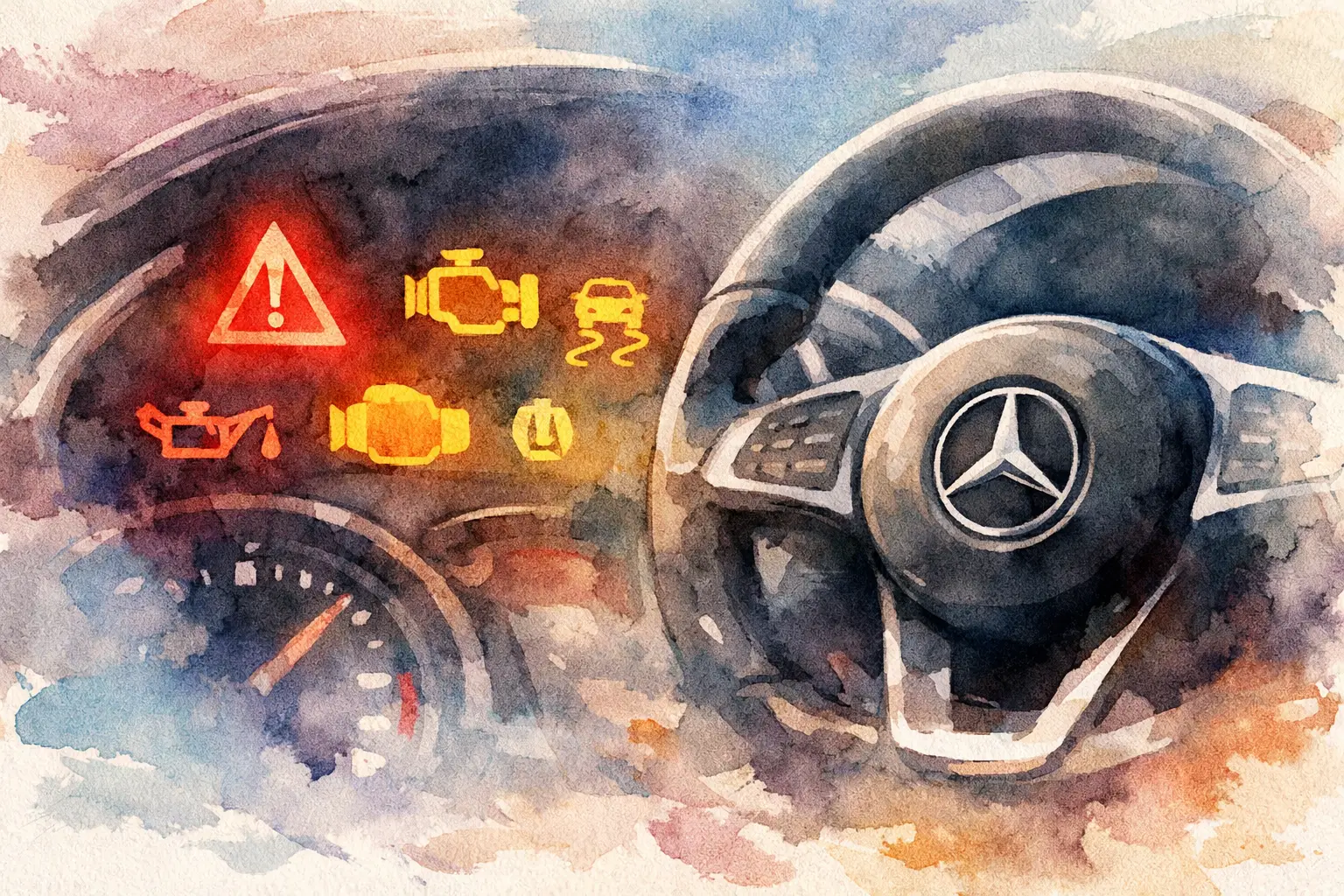
A Mercedes warning light rarely comes on at a convenient time. It shows up during the morning commute on 101, right before a weekend trip, or just after you filled the tank and thought everything felt fine. That is why accurate Mercedes warning light diagnosis matters. The light on the dash is only the starting point. The real issue may be simple, urgent, or somewhere in between, and guessing can get expensive fast.
Why Mercedes warning light diagnosis is different
Mercedes-Benz vehicles monitor far more than basic engine functions. Modern models track powertrain performance, emissions systems, brake components, steering input, battery voltage, suspension behavior, safety systems, and a long list of networked control modules. When a light appears, the car is telling you a system has seen a fault condition, but it is not always telling you exactly which part failed.
That is where many owners get stuck. A generic code reader might pull a broad fault code and point toward one system, but Mercedes diagnostics often require live data, factory-level scan tools, and brand-specific experience to separate the root cause from the symptom. A warning for the battery, for example, may not mean the battery itself is bad. It could involve the charging system, voltage management, wiring, or a failing control module.
This is also why replacing parts based on internet advice can become a cycle of wasted time and money. The dash light is a clue. Proper diagnosis is the process.
What the most common warning lights usually mean
Some warning lights deserve immediate attention, while others allow a short window to schedule service. The difference depends on the system involved, how the vehicle is behaving, and whether the issue affects safety or drivability.
Check engine light
This is one of the most misunderstood warnings on any Mercedes. Sometimes it points to a minor emissions fault such as a purge valve issue, fuel system adaptation problem, or a loose gas cap. Other times it signals misfires, sensor faults, turbocharger problems, or timing-related concerns.
If the light is steady and the vehicle still runs normally, you may have time to schedule service soon. If it is flashing, the engine may be misfiring badly enough to damage the catalytic converter. In that case, driving further is a risk.
ABS, ESP, or traction control warnings
Mercedes stability and braking systems are closely integrated. A wheel speed sensor fault can trigger ABS and traction warnings, but so can steering angle sensor issues, low voltage, tone ring damage, or faults inside the braking control system itself.
Drivers often notice these lights after hitting a pothole, replacing a battery, or during wet-weather driving. Sometimes the cause is straightforward. Sometimes several modules need to be checked together before the actual fault becomes clear.
Battery or charging system warning
On a Mercedes, low system voltage creates all kinds of false-looking symptoms. You may see multiple warning lights, sluggish starting, transmission complaints, inoperative accessories, or intermittent communication faults between modules.
That does not always mean you just need a battery. It may be an aging battery, a weak alternator, parasitic draw, poor ground connection, or charging management issue. Voltage problems are a good example of why proper testing matters more than assumptions.
Coolant temperature or engine temperature warning
This one should never be ignored. If your Mercedes is overheating, continued driving can turn a manageable repair into major engine damage. The fault could involve a thermostat, water pump, electric fan, coolant leak, radiator issue, or in some models, an oil or coolant system component that is beginning to fail under load.
If the gauge is climbing or the warning appears with steam, odor, or reduced performance, shut the vehicle down as soon as it is safe.
Air suspension warning
Many Mercedes SUVs and sedans use sophisticated air suspension systems that deliver a smooth ride and adjustable height. When a suspension warning light appears, the problem may involve an air strut, valve block, compressor, ride height sensor, or leaks in the system.
Some owners first notice one corner sitting low overnight. Others hear the compressor running longer than usual. Catching these issues early can help prevent extra strain on other components.
SRS or airbag warning
An airbag light means the supplemental restraint system has stored a fault and may not operate as intended in a crash. Causes range from seat occupancy sensors and wiring issues to module faults or low-voltage events. This is not a warning to postpone for convenience.
What proper diagnosis looks like
A good diagnostic process does more than read codes and clear them. On a Mercedes, the technician needs to confirm the complaint, scan all relevant modules, review stored and current faults, and compare those codes with live operating data. In many cases, technical experience with common Mercedes failure patterns is what keeps diagnosis efficient.
For example, if a check engine light appears with lean codes, a generic approach may suggest oxygen sensors. A Mercedes specialist may know to test for crankcase ventilation issues, intake leaks, fuel trim behavior, or model-specific faults that commonly trigger the same code family. The goal is not to chase the dashboard message. It is to verify the root cause before recommending repairs.
This also helps avoid the two problems owners dislike most: unnecessary parts replacement and vague answers. If a shop cannot tell you what failed, why it failed, and what testing confirmed it, the estimate may be more guess than diagnosis.
When you should stop driving
Not every warning light means pull over immediately, but some do. If your Mercedes shows a red temperature warning, oil pressure warning, brake system warning, or severe drivability symptoms such as shaking, loss of power, or loud mechanical noise, it is safest to stop driving and have the vehicle evaluated.
Yellow or amber warnings usually indicate a problem that should be checked soon rather than ignored indefinitely. Even then, context matters. An amber check engine light with a rough idle is more urgent than the same light with no noticeable change in how the car drives. A suspension warning on a vehicle that is leaning badly is more serious than one with no change in ride height.
If you are unsure, caution is cheaper than damage.
Why Mercedes owners should be careful with generic scans
There is nothing wrong with wanting quick answers. Many owners use handheld code readers or stop at parts stores for a free scan. The issue is that Mercedes systems are too complex for those tools to tell the full story.
A generic reader may miss manufacturer-specific faults, fail to access body and chassis modules, or oversimplify a code description. That can lead you toward the wrong repair path. We have seen vehicles arrive after owners replaced sensors, batteries, or switches that were never the true problem.
Factory-trained technicians with Mercedes-specific equipment can usually see far more detail, including freeze-frame data, module communication history, adaptation values, and subsystem faults that generic tools simply do not show.
The value of specialist experience
Mercedes vehicles are engineered differently than many mainstream cars, and they respond best to technicians who work on them every day. Pattern recognition matters. So does knowing which faults tend to occur together, which tests save time, and which repairs need coding, calibration, or follow-up procedures after installation.
For Silicon Valley drivers who rely on their vehicle for commuting, family travel, or weekend performance driving, that experience translates into less downtime and fewer surprises. It also means recommendations can be more precise. Sometimes the right answer is immediate repair. Sometimes it is monitoring a non-critical issue and planning service before it becomes urgent. Honest diagnosis includes that distinction.
At Mercedes Service of Silicon Valley, that brand-specific approach is a big part of why owners choose an independent specialist over the dealership. They want dealer-level capability, but they also want straight answers and a repair plan that makes sense.
What to do when a warning light comes on
Start by noticing the basics. Is the light red or amber? Is the vehicle driving normally, or has something changed in the way it starts, idles, shifts, brakes, steers, or rides? Did the warning appear once, or does it return every time you drive?
Those details help, but they should not replace testing. Avoid clearing codes just to make the light disappear, especially before a proper inspection. Stored data can be valuable, and erasing it may make diagnosis harder.
If the vehicle is safe to drive, schedule service promptly. If it is overheating, shaking, losing power, or showing a brake or oil pressure warning, stop driving and arrange for a tow. A calm response beats a delayed one.
A warning light is your Mercedes asking for attention, not necessarily announcing disaster. The smart move is to treat it early, diagnose it correctly, and keep a small problem from becoming a much bigger one.