A Mercedes-Benz turbo engine can gain meaningful power without changing a single hard part. That possibility makes the ECU tuning vs piggyback decision attractive, especially for drivers who want stronger highway passing, sharper midrange response, or AMG-level urgency from their daily driver. But these two approaches do not work the same way, and the right answer depends on your engine, your goals, and how you intend to maintain the vehicle.
For a properly serviced Mercedes, tuning can be an excellent performance upgrade. For a vehicle with unresolved faults, overdue maintenance, or a history of warning lights, it can magnify an existing problem. The first step is not choosing the biggest advertised horsepower number. It is confirming that the vehicle is a sound candidate for additional power.
ECU Tuning vs Piggyback: The Core Difference
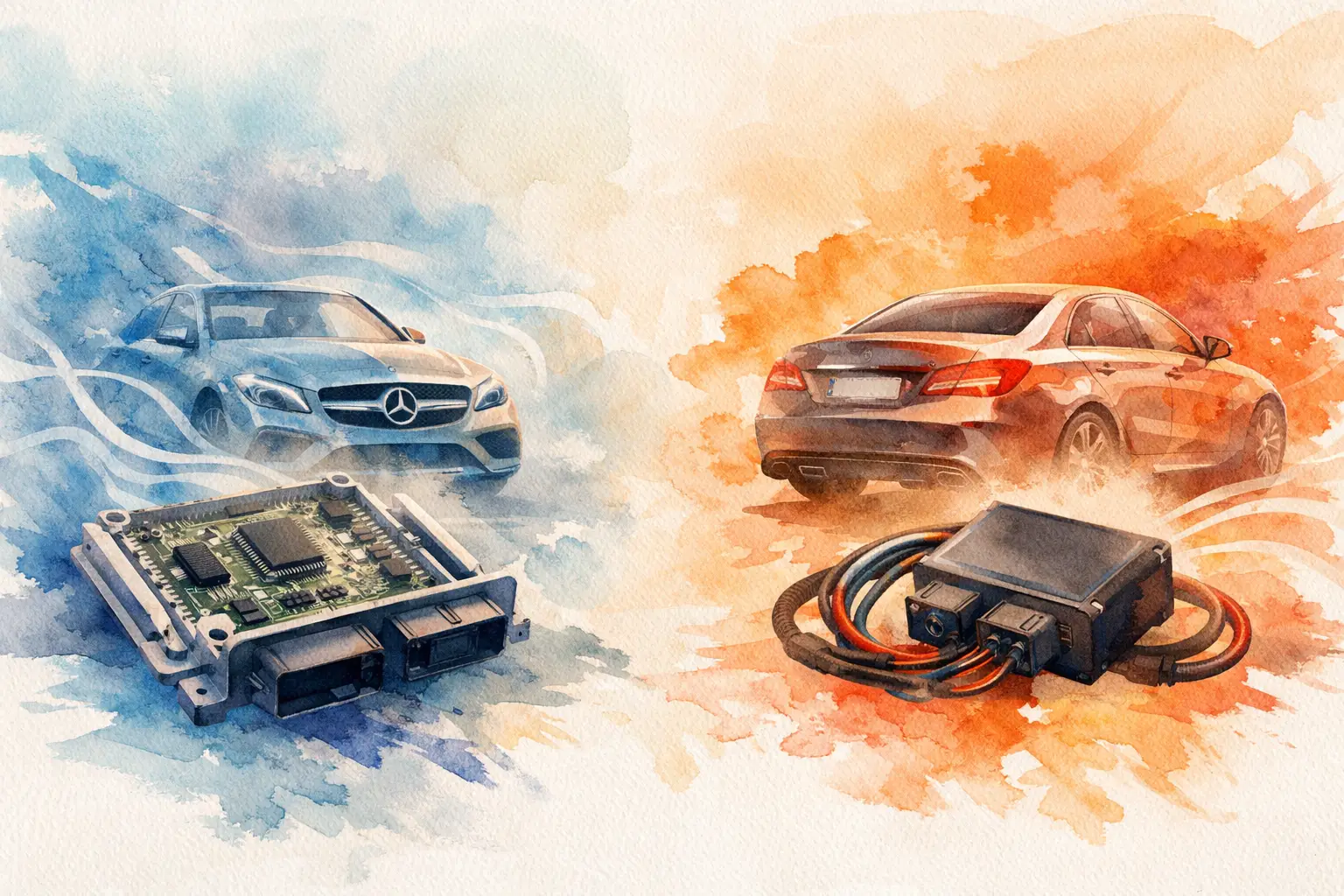
An ECU tune changes the calibration within the engine control unit. Depending on the platform and software, it may adjust boost targets, fuel delivery, ignition timing, torque limits, throttle mapping, transmission behavior, and other factory operating strategies. The goal is to make the engine and its supporting systems work from a revised set of instructions.
A piggyback module is an external device installed between certain sensors and the factory ECU. Instead of rewriting the ECU’s software, it intercepts and modifies signals the ECU receives, commonly from boost, pressure, or fuel-related sensors. The factory ECU then responds to those altered signals by changing how the engine operates.
That distinction matters. ECU tuning generally offers more complete control because it works directly with the vehicle’s calibration. A piggyback can be a practical option for some owners, but it typically works around the factory logic rather than revising it at the source.
What an ECU Tune Can Do Better
Modern Mercedes-Benz vehicles are heavily torque-managed. The ECU does far more than request boost. It coordinates engine output with transmission operation, traction control, temperature protection, fuel quality adaptations, and component limits. A well-developed ECU calibration can account for those relationships rather than addressing one sensor input alone.
For turbocharged Mercedes models, that often produces a more natural result. Power delivery can be smoother, throttle response more predictable, and torque management more appropriately matched to the engine and transmission. A quality tune may also provide selectable maps or calibrations designed for different fuel grades, where supported by the platform.
The benefit is not simply peak horsepower. A strong calibration improves usable torque in the range where most drivers feel it: merging onto Highway 101, climbing through the Santa Cruz Mountains, or accelerating from 40 to 70 mph without waiting for a downshift.
There are trade-offs. ECU access varies by model year, engine family, and software version. Some newer Mercedes control units require specialized bench or unlock procedures before tuning. Software updates performed during dealer visits can potentially overwrite a tune, so owners should keep records of the original calibration and understand the process for restoring their performance software.
Where a Piggyback Makes Sense
A piggyback can appeal to owners who prefer a removable modification or who want a relatively quick path to added output. Many units are installed without permanent changes to the factory ECU software, and some can be removed before selling the vehicle or returning it from a lease.
On the right application, a reputable piggyback can deliver noticeable gains. It may be especially appealing when ECU tuning options are limited or when an owner wants a conservative increase without changing the factory calibration directly.
Still, removable does not mean invisible or risk-free. The ECU retains operating data, and modern vehicles record far more information than many drivers realize. More importantly, the engine does not care whether additional stress comes from a piggyback or a flash tune. Higher boost, higher cylinder pressure, and greater heat load still place greater demands on the powertrain.
Piggybacks can also be less refined in situations where the ECU’s torque calculations, transmission requests, and sensor plausibility checks are tightly integrated. The quality of the module and its calibration matters greatly. A low-cost device that merely chases boost pressure is not equivalent to a properly engineered solution tested on the specific Mercedes platform.
Power Is Only One Part of the Decision
A tune should match the car’s job. A C-Class commuter with a 2.0-liter turbo may benefit most from a conservative calibration that improves midrange torque while preserving smooth daily behavior. An AMG owner planning track days may have different needs, including upgraded cooling, brakes, tires, and more frequent fluid service.
Mercedes engines are engineered with safeguards, but they are not immune to heat, poor fuel, neglected service, or repeated maximum-load driving. More power can expose weak ignition coils, worn spark plugs, aging charge-air components, marginal fuel delivery, or cooling-system concerns that were not obvious at stock output.
Before installing either option, a Mercedes specialist should check for stored fault codes, boost leaks, oil leaks, cooling concerns, misfires, and service history. Spark plugs may need to be replaced early or gapped differently depending on the application. The correct oil specification, fresh filters, and quality premium fuel are basic requirements, not optional extras.
Warranty, Emissions, and Insurance Considerations
Performance modifications can affect warranty coverage. A manufacturer cannot automatically deny every warranty claim because a vehicle has been modified, but a claim related to a modified or stressed component may be disputed. If an engine, turbocharger, transmission, or emissions-related issue occurs, the modification can become part of the discussion.
Owners should also consider emissions compliance. California has strict requirements, and not every tune or piggyback is legal for use on public roads in every application. A product that works mechanically may still create inspection or registration complications. Ask specifically whether the exact model, engine, and model year have an applicable emissions certification for street use.
Insurance is another practical consideration. Some policies require disclosure of performance modifications. It is worth a short call before installing parts rather than discovering a coverage issue after an accident or theft claim.
Which Choice Is Better for Your Mercedes?
For the owner seeking the most integrated, model-specific performance solution, ECU tuning is usually the stronger option. It can provide more precise control, smoother power delivery, and a calibration that considers the engine’s broader operating strategy. That does not mean every ECU tune is good. The software provider’s development standards, fuel requirements, and support matter as much as the method.
A piggyback may be the better fit for an owner who values reversibility, has limited ECU tuning access, or wants a measured performance gain on a newer vehicle. It should still be selected carefully and installed with the same attention to maintenance and diagnostics as any other power modification.
Neither option is automatically safer simply because of its format. A conservative, well-supported tune on a healthy vehicle can be a better long-term choice than an aggressive piggyback setting on a car with worn plugs and questionable fuel. Conversely, a conservative piggyback may suit an owner who does not want to alter ECU software directly.
Start With Diagnostics, Not Marketing Claims
Advertised gains are usually measured under controlled conditions with specific fuel, weather, and vehicle configurations. Silicon Valley traffic, summer heat, varying pump fuel quality, and a fully loaded SUV can create a very different real-world environment. The best modification is one that remains smooth and dependable when the car is driven the way you actually use it.
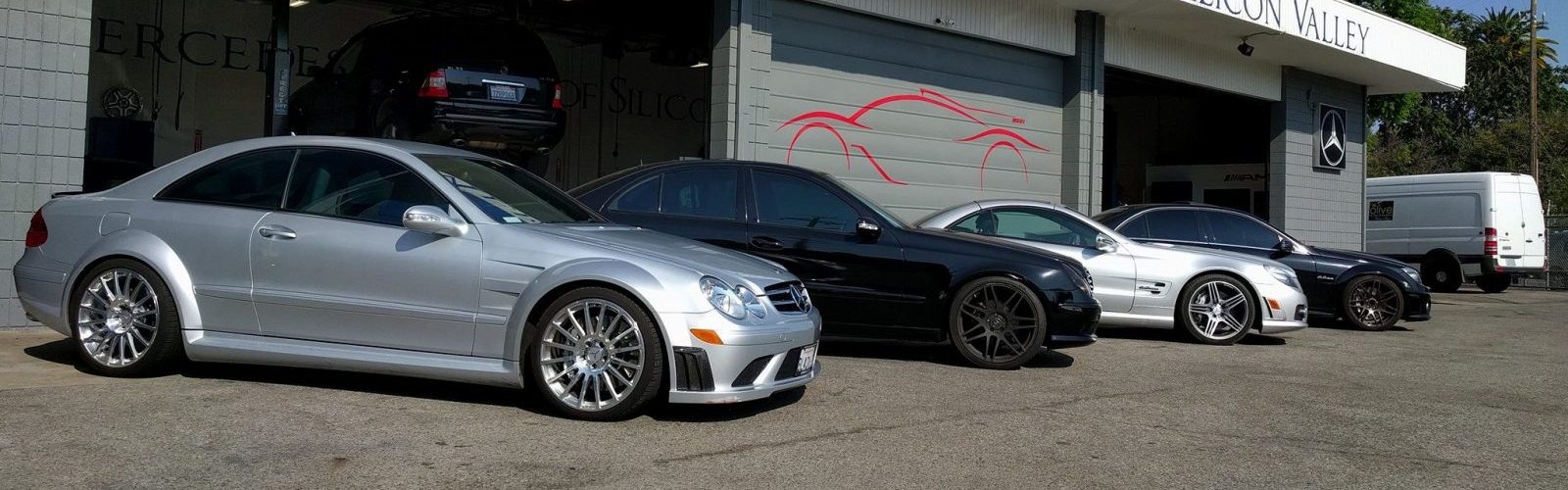
At Mercedes Service of Silicon Valley, the approach to performance begins with the same factory-level diagnostic discipline used for repair work. That means evaluating the vehicle’s condition, discussing your driving goals honestly, and recommending a path that respects the engineering behind your Mercedes-Benz.
If you are considering more power, bring the conversation back to the vehicle in front of you: its maintenance history, engine condition, intended use, and your tolerance for added responsibility. A thoughtful plan will always serve your Mercedes better than a quick horsepower claim.