
A Mercedes that tracks straight on a smooth San Jose freeway can still have alignment angles outside specification. That is why the question, does Mercedes need alignment, is less about waiting for a dramatic pull and more about protecting the precise handling, tire life, and ride quality the vehicle was engineered to deliver.
Mercedes-Benz suspension systems are designed with tight tolerances. From a C-Class commuter sedan to an AMG performance model, GLE SUV, or Sprinter, small changes in camber, toe, or caster can affect how the vehicle feels and how quickly it wears through expensive tires. An alignment check is not an automatic maintenance item at every visit, but it is a smart inspection when symptoms, tire wear, or a recent impact point to a problem.
Does Mercedes Need Alignment on a Set Schedule?
Mercedes-Benz does not require a wheel alignment at every oil service or routine maintenance appointment. If the vehicle drives properly, the steering wheel is centered, and the tires are wearing evenly, there is no benefit in selling an alignment simply because a certain number of months have passed.
Still, alignment should be checked when conditions justify it. For many Silicon Valley drivers, that means having it evaluated roughly once a year or when replacing tires, especially if the vehicle regularly encounters rough pavement, steep driveway transitions, potholes, or curb contact. Low-profile tires and larger wheels found on many AMG and sport-package models leave less margin for error after an impact.
The right approach is diagnostic, not automatic. A qualified Mercedes specialist should inspect the tires, suspension components, steering system, and current alignment readings before recommending correction. If the angles are within Mercedes specifications and tire wear looks healthy, the honest answer may be that no alignment is needed.
Signs Your Mercedes May Need an Alignment
A steering pull is the symptom most drivers recognize, but it is not the only one. In fact, tire wear often reveals an alignment issue before the steering wheel feels noticeably wrong.
If your Mercedes drifts consistently left or right on a level road, needs frequent steering correction, or has a crooked steering wheel while traveling straight, it deserves an inspection. Keep in mind that road crown can create a mild drift on some streets. The concern is a repeatable pull that remains on different roads and at different speeds.
Uneven tire wear is another major clue. Excessive wear along the inside or outside shoulder can indicate a camber problem, while a feathered or saw-tooth feel across the tread often points to incorrect toe. Toe may be only slightly out of range, but it can scrub away tire tread surprisingly quickly.
Other signs include a vehicle that feels unsettled over bumps, a steering wheel that does not return naturally after a turn, or a change in handling after hitting a pothole. These symptoms do not always mean the alignment is the only issue. Worn control arm bushings, damaged wheels, weak dampers, tire pressure differences, or tire defects can create similar concerns. That is exactly why a proper inspection matters.
After an Impact or Suspension Repair
An alignment check is strongly recommended after a significant pothole strike, curb impact, or collision, even when there is no obvious damage. A bent wheel, shifted suspension component, or altered toe setting may not be visible from the outside.
Alignment is also appropriate after replacing steering or suspension parts such as tie rods, control arms, ball joints, springs, or certain subframe components. Those parts establish the wheel’s relationship to the road, so changing them can change alignment angles. On vehicles equipped with air suspension or electronically controlled suspension, the vehicle must also be at the proper ride height during measurement and adjustment.
Why Mercedes Alignment Is More Than a Basic Tire-Shop Service
A wheel alignment is often described as a simple adjustment, but the process is more involved on a Mercedes-Benz than many drivers expect. The technician is not merely making the steering wheel look straight. They are measuring and, where adjustment is available, correcting the relationship of all four wheels to the vehicle’s centerline and to one another.
Camber is the inward or outward tilt of the wheel. Caster influences straight-line stability and steering return. Toe describes whether the tires point slightly inward or outward when viewed from above. Each angle affects handling and tire wear, and each must be interpreted using the correct Mercedes specifications for the exact chassis, wheel-and-tire configuration, suspension design, and ride height.
A quality alignment starts with a pre-alignment inspection. There is little value in setting alignment on a vehicle with loose tie rods, worn bushings, damaged control arms, incorrect tire pressures, or unevenly worn tires. Those conditions can make readings unreliable or cause the alignment to change again soon after the work is completed.
Factory-level diagnostic capability also matters on newer Mercedes vehicles. Some models may require steering angle sensor calibration or electronic system initialization after alignment-related work. Driver-assistance features such as lane keeping and active steering rely on the vehicle knowing where straight ahead actually is. Skipping the electronic side of the process can leave a vehicle driving poorly or displaying warning messages even if the mechanical angles are close.
The Tire Cost of Waiting Too Long
Premium Mercedes tires are not inexpensive, particularly on staggered wheel setups where the front and rear tires cannot be rotated. A small toe error can shorten tire life well before the driver notices a serious handling concern. On an AMG model, wide performance tires can make that expense even more noticeable.
Alignment cannot repair a tire that has already worn unevenly. Once a shoulder is bald or the tread is heavily feathered, correction can stop the problem from worsening, but tire replacement may still be necessary. Catching the issue early is usually the difference between a straightforward alignment and buying tires ahead of schedule.
There is also a safety consideration. Uneven tire wear can reduce wet-weather grip, affect braking stability, and make the vehicle less predictable during emergency maneuvers. Those risks matter on any Mercedes, whether it spends most of its time on Highway 101, city streets, or weekend drives through the Santa Cruz Mountains.
Alignment, Balancing, and Tire Pressure Are Different Services
These terms are often grouped together, but they address different problems. Alignment adjusts the direction and angles of the wheels. Tire balancing corrects weight distribution in the wheel-and-tire assembly to reduce vibration. Tire pressure ensures the tire supports the vehicle correctly and wears as intended.
A vibration through the steering wheel at highway speeds is more commonly a balancing, tire, or wheel issue than an alignment issue. A pull under braking may be related to brake performance, tire condition, or suspension wear. A knowledgeable technician should avoid guessing based on one symptom and instead identify the actual cause.
This distinction is particularly useful for Mercedes owners because the vehicle’s refined ride can make subtle changes easier to notice. A small vibration, a new pull, or abnormal tire noise is worth checking before it becomes a larger repair or a premature tire replacement.
What to Expect From a Proper Mercedes Alignment Inspection
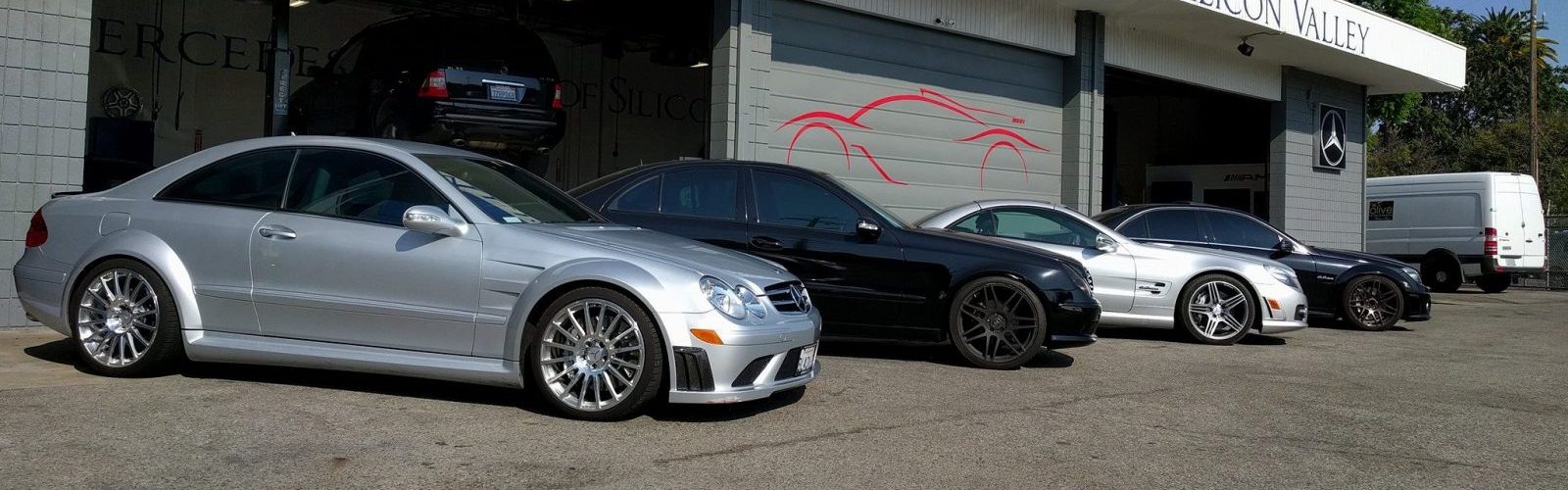
At Mercedes Service of Silicon Valley, the goal is to determine whether your vehicle needs correction before recommending work. The process begins with a road-test discussion when appropriate, including when the concern occurs and whether there was a recent impact, tire change, or suspension repair.
The technician then evaluates tire condition and pressures, wheel condition, steering and suspension play, ride height, and alignment measurements. If an adjustment is needed, it should be performed using equipment and specifications appropriate to the Mercedes chassis. Afterward, the steering wheel should be centered and the final readings should confirm that the vehicle is within the intended range.
There are cases where factory specifications are not the whole conversation. Enthusiasts with aftermarket suspension, performance tires, or HD Tuning-related performance upgrades may have specific handling goals. A more aggressive alignment can improve turn-in or track response, but it may also accelerate tire wear or make the car less relaxed on daily commutes. Those trade-offs should be explained clearly before any settings are changed.
When to Book an Alignment Check
Book an inspection if you notice uneven tire wear, a consistent pull, an off-center steering wheel, or a handling change after an impact. It is also wise to check alignment after suspension repairs and when installing new tires, particularly if the previous set wore unevenly.
Do not wait for the vehicle to become difficult to control. The best time to address alignment is when the first clue appears, while the tires and suspension components still have a chance to deliver the comfort, stability, and confidence expected from a Mercedes-Benz.