A Mercedes that feels slightly held back is usually that way on purpose. Factory software has to account for emissions targets, fuel quality, climate, driving habits, and broad market reliability standards. For many owners, that leaves real performance on the table. That is exactly why hd tuning mercedes benz software has become a serious option for drivers who want more response, more usable power, and a better overall driving experience without changing the character that made them buy the vehicle in the first place.
For Mercedes owners, tuning is not just about chasing a bigger horsepower number. The best calibrations improve how the vehicle behaves in everyday use. Throttle response can feel cleaner, torque can arrive sooner, and transmission behavior can become more natural under acceleration. On the right platform, the result is a car or SUV that feels more awake, not more temperamental.
What HD Tuning for Mercedes-Benz Actually Changes
HD Tuning works through software calibration rather than mechanical guesswork. In practical terms, that means adjusting the parameters that control boost, fuel delivery, ignition timing, throttle mapping, torque management, and in some cases transmission behavior. The goal is to safely optimize what Mercedes engineered, based on the capabilities already built into the powertrain.
That matters because modern Mercedes-Benz vehicles are software-driven machines. The ECU and related control modules govern far more than peak output. They shape drivability, shift quality, part-throttle smoothness, and how power is delivered across the rev range. A proper calibration looks at the whole system, not just a dyno chart.
On turbocharged Mercedes engines, which make up much of the current lineup, tuning can offer especially noticeable gains. Turbo engines often respond well because the factory leaves margin in boost and torque delivery. On naturally aspirated models, gains may be more modest, but improved throttle behavior and sharper mapping can still make the vehicle feel more refined and responsive.
Why Owners Consider HD Tuning Mercedes-Benz Software
Most owners who ask about tuning are not building a track-only car. They are driving on 680, 880, or 101, merging into fast traffic, climbing grades, carrying family, or simply wanting the vehicle to feel more worthy of the badge. In those situations, extra midrange torque often matters more than peak horsepower.
A well-tuned Mercedes can feel stronger in the exact range where you use it most. Passing requires less hesitation. Highway merging feels easier. In an AMG model, the power delivery can feel more immediate and better matched to the chassis. In a daily-driven SUV, the improvement may show up as reduced lag and more confident acceleration rather than anything dramatic.
There is also the ownership side of the equation. Many drivers want an alternative to one-size-fits-all dealership service and generic aftermarket shops that do not specialize in Mercedes systems. Tuning a Mercedes correctly requires knowing the platform, the software logic, and the difference between what is technically possible and what is actually wise for long-term use.
Not Every Mercedes Should Be Tuned the Same Way
This is where experience matters. Two Mercedes vehicles with similar engines may still need different tuning approaches based on mileage, maintenance history, supporting hardware, fuel quality, and how the owner uses the vehicle.
A newer C-Class with a healthy turbo system and current maintenance may be a strong candidate for a more assertive calibration. A higher-mileage E-Class with aging ignition components, intake leaks, or deferred service may need inspection and repair first. Tuning does not fix mechanical wear. In some cases, it reveals weaknesses that were already present.
That is why the conversation should start with condition, not marketing claims. Before any software changes are made, the car should be evaluated with proper Mercedes diagnostic equipment and by technicians who understand the common weak points on that specific platform. If the engine mounts are failing, the coils are weak, or there is a boost leak, adding power is the wrong first move.
The Difference Between Safe Tuning and Risky Tuning
There is a big gap between a calibration developed around real Mercedes data and a generic file loaded because the price was low. Owners do not always see that difference right away, but the car eventually will.
Safe tuning respects thermal limits, fuel system capacity, transmission tolerances, and the intended use of the vehicle. Risky tuning tends to chase numbers while ignoring the supporting systems. That can lead to inconsistent drivability, premature wear, fault codes, or a car that feels impressive for a week and problematic after that.
Mercedes vehicles are sophisticated. Their control systems are interconnected, and small software changes can affect much more than straight-line acceleration. A calibration has to work with factory safeguards, not fight them blindly. That is especially true on newer models with advanced transmission logic, adaptive systems, and tight integration between engine management and chassis behavior.
What to Expect After Tuning
The right expectations make for a better result. Most owners notice the biggest change in the way the vehicle responds to input. The engine feels less delayed. The torque curve feels fuller. The car often becomes easier to drive smoothly because the power arrives in a more usable way.
You may also notice that the transmission feels different under load if the tune includes related calibration changes. Depending on the model, shifts can feel quicker, more decisive, or better aligned with the engine’s torque output. That said, a good tune should not make the car jerky or unpleasant in traffic. If it does, something is off.
Fuel economy is a more nuanced topic. Some drivers see little change during normal cruising, and a few may even notice slight improvement if the calibration increases efficiency in light-throttle driving. But if you use the added power often, fuel consumption will usually rise. More performance and better economy can coexist in some conditions, but not as a blanket promise.
Supporting Maintenance Still Matters
Tuning works best on a Mercedes that is already well maintained. Fresh spark plugs, proper fluids, healthy coils, clean intake plumbing, current software where applicable, and a transmission in good condition all matter. Performance gains are only as dependable as the systems supporting them.
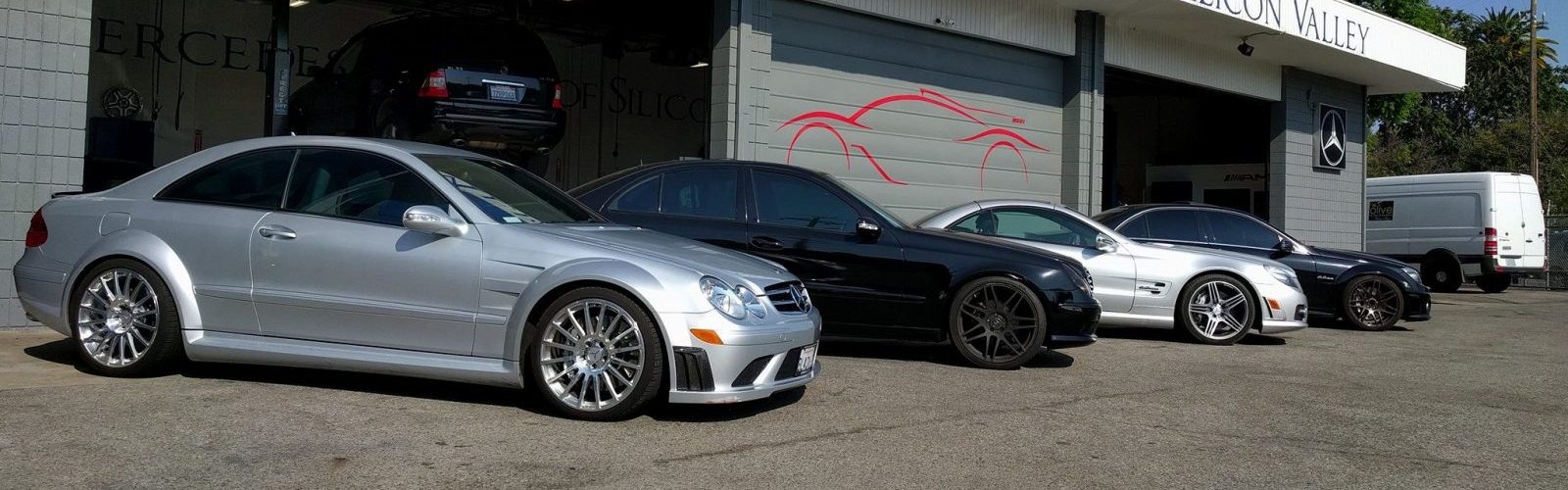
This is one reason Mercedes owners in Silicon Valley often prefer a specialist relationship over a transactional visit. A shop that sees the car regularly can tell you whether the platform is ready for tuning now, whether it should wait until after service, or whether a conservative approach makes more sense given the vehicle’s age and goals.
That honesty matters. Not every customer needs the most aggressive file. Sometimes the better choice is a balanced calibration that improves response and drivability while preserving a comfortable safety margin for daily use, heat, and long-term reliability.
Dealer-Level Knowledge Without the Dealership Approach
When tuning is paired with factory-trained Mercedes expertise, the process becomes much more predictable. The vehicle can be evaluated correctly, diagnosed accurately, and serviced to OEM standards before and after any software changes. That is very different from treating tuning as a standalone transaction.
At a Mercedes-focused shop, the benefit is not just access to software. It is the ability to look at the entire vehicle through a Mercedes lens. If there is a pending fault, a weak diverter valve, a transmission adaptation concern, or a maintenance item that should be addressed first, it should be caught before performance modifications begin.
That approach is part of why Mercedes Service of Silicon Valley has built trust with owners who want more than a sales pitch. For some drivers, tuning is the next step after establishing a solid service baseline. For others, the right answer is to handle maintenance first and revisit performance later. Either answer can be the honest one.
Is HD Tuning Right for Your Mercedes?
It depends on what you want from the car and what condition it is in now. If you want sharper throttle response, stronger midrange power, and a more engaging drive while keeping the refined feel Mercedes is known for, HD Tuning can make a meaningful difference. If the vehicle already has unresolved mechanical issues or you expect race-car gains from a daily driver with no supporting preparation, expectations need to be reset.
The best tuning decisions come from a clear baseline, realistic goals, and a shop that knows Mercedes systems in depth. That combination protects the investment and usually leads to a result that feels better every day, not just on the first hard pull.
If you are considering tuning, start by asking the simple question that matters most: is your Mercedes healthy enough to benefit from it the right way? That answer will tell you far more than any advertised number ever will.