
When your Mercedes turns on the check engine light, stumbles at idle, loses power on Highway 101, or starts burning through fuel faster than usual, guessing is the expensive route. A proper Mercedes engine diagnostic in San Jose should do more than pull a generic code. It should identify the actual fault, explain why it happened, and separate what needs attention now from what can wait.
That distinction matters because Mercedes engines are not simple, one-size-fits-all systems. Modern Mercedes-Benz vehicles rely on tightly integrated control modules, precise fuel and ignition management, turbocharging on many models, and a long list of sensors that all affect drivability. A fault in one area can trigger symptoms somewhere else. That is why a generic scan at a parts store often tells only part of the story.
What a Mercedes engine diagnostic should actually include
A real diagnostic process starts with Mercedes-specific equipment and technicians who know how these cars are engineered. Reading fault codes is only the first step. Those codes point the technician in a direction, but they do not automatically identify the failed part.
For example, a code related to mixture adaptation, boost pressure, ignition misfire, camshaft timing, or crankcase ventilation can have several possible causes. The right diagnosis comes from pairing stored faults with live data, visual inspection, system testing, and experience with known Mercedes failure patterns.
On many Mercedes models, engine concerns also overlap with transmission behavior, electrical systems, emissions components, and software logic. What feels like an engine problem may be tied to a sensor network issue, a vacuum leak, a failing coil, carbon buildup, a timing component concern, or a control unit response to another fault in the system. That is where brand-specific expertise saves time and money.
Why Mercedes engine diagnostic in San Jose requires brand-specific experience
Silicon Valley drivers put unique demands on their vehicles. Stop-and-go commuting, short trips, long periods of idling, hot days, and occasional spirited driving all affect how an engine wears and how symptoms show up. Mercedes vehicles handle these conditions well, but only when they are maintained and diagnosed correctly.
A technician who works on every make may be very capable, but Mercedes systems have their own logic, service procedures, and common trouble areas. Certain engines are known for specific issues, and recognizing those patterns speeds up diagnosis. A factory-trained Mercedes specialist can often tell the difference between a true component failure and a symptom that is being triggered by another root cause.
That matters even more on turbocharged engines, AMG models, and newer vehicles packed with electronic controls. If the diagnostic process is rushed, the result is often parts replacement by trial and error. That approach gets expensive fast, and it does not build trust.
Common symptoms that deserve a Mercedes engine diagnostic San Jose appointment
Some engine problems announce themselves clearly. Others start small and become expensive if ignored. If your Mercedes is showing any of these signs, it is worth scheduling a proper evaluation before the issue spreads.
A check engine light is the obvious one, but not the only one. Rough idle, sluggish acceleration, hesitation under load, reduced fuel economy, hard starting, unusual smoke, fuel smell, rattling from the engine bay, or a sudden change in exhaust note can all point to underlying engine faults.
Sometimes the vehicle still feels drivable, which makes it tempting to wait. That can be reasonable in a few cases, but it depends on the symptom. A minor fault code may not strand you today, while an active misfire or cooling-related issue can damage the catalytic converter or engine internals if you keep driving. The smart move is to find out what you are dealing with before it turns into a larger repair.
Problems that are often misdiagnosed
Mercedes owners often come in after being told they need a major repair when the actual fix is smaller, or the opposite. A rough-running engine might be blamed on spark plugs when the deeper issue is a breather system problem, injector fault, air leak, or sensor reading that is skewing fuel trims. Oil leaks can be written off as normal aging when they are affecting nearby components and causing secondary symptoms.
Likewise, a warning light tied to emissions may not mean the emissions component itself has failed. The underlying cause may start upstream in the ignition, intake, or fuel system. Good diagnostics protect you from replacing the wrong parts and paying twice.
What happens during a professional diagnostic visit
The best shops approach diagnostics methodically. First comes a conversation about what you are noticing – when the symptom occurs, whether it is intermittent, how long it has been happening, and if any recent repairs or maintenance were performed. That information matters because pattern recognition is a big part of accurate testing.
Next comes a Mercedes-specific scan of the control systems, not just the engine module alone. Fault memory, freeze-frame data, adaptation values, and live readings help narrow the possibilities. From there, the technician may perform smoke testing for intake leaks, ignition analysis, fuel system checks, compression or leak-down testing, software review, or physical inspection of related components.
At a quality independent specialist, you should also get a clear explanation of the findings. Not every issue requires immediate major work. Sometimes there is a critical repair, a secondary recommendation, and a maintenance item that should be planned for later. Honest prioritization is part of good service.
Dealer-level tools without the dealership experience
Many Mercedes owners assume the dealership is the only place equipped to diagnose their vehicle properly. That is understandable, but it is not always true. A specialized independent shop with factory-trained technicians and genuine diagnostic equipment can often provide the same level of technical accuracy with more direct communication and a more personal experience.
That difference shows up in practical ways. You are more likely to speak with people who know your vehicle history, explain the test results in plain language, and help you make a cost-conscious decision without pressure. For owners planning to keep their Mercedes long term, that kind of relationship matters as much as the repair itself.
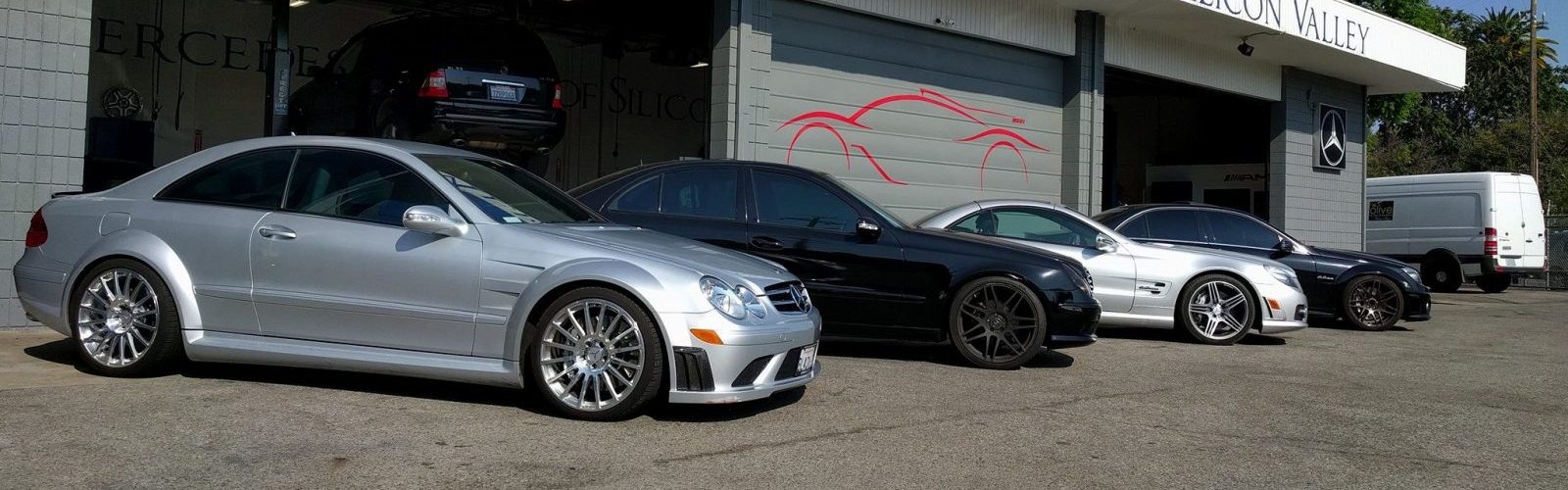
Mercedes Service of Silicon Valley built its reputation around exactly that approach – Mercedes-only expertise, transparent recommendations, and the kind of attention you usually lose in a larger dealership setting.
Why cheaper diagnostics are not always cheaper
Everyone wants to avoid overpaying. That does not mean the lowest-priced diagnostic is the best value. If the initial testing is too basic, you may leave with a vague code description, an unproven parts recommendation, or a reset light that comes back a week later.
A more thorough diagnostic may cost more up front, but it often prevents unnecessary parts replacement and repeated visits. That is especially true on complex Mercedes engines where one failure can mimic another. Accurate testing is not just about finding a problem. It is about finding the first problem.
There is also the question of parts quality and repair standards after the diagnosis. Once the fault is identified, the repair should be carried out with OEM parts and fluids when required, proper procedures, and attention to any related systems that may have contributed to the issue. Skipping that part can undo the value of a good diagnosis.
For daily drivers and enthusiast-owned Mercedes alike
Not every customer comes in with the same priorities. Some just want their C-Class, E-Class, GLE, or Sprinter to start reliably every morning and handle Bay Area traffic without drama. Others are more performance-focused and want their AMG or tuned Mercedes running exactly as it should. The diagnostic approach should adapt to that.
For a commuter vehicle, the focus may be reliability, emissions readiness, and preventing larger repair bills. For a performance car, the concern may be boost control, fueling, drivability under load, or protecting engine health before modifications go further. In both cases, the process still starts with accurate data and Mercedes-specific insight.
Choosing the right shop for Mercedes engine diagnostic San Jose
The best shop is not just the one with a scanner. It is the one with the right scanner, the right training, and the judgment to interpret what the vehicle is saying. Ask whether the technicians work specifically on Mercedes-Benz vehicles, whether they use OEM-quality parts and fluids, and how they communicate findings. If the answer sounds rushed or vague, keep looking.
You should also expect honesty about what is not needed. Trust is built when a shop can explain why a repair is necessary, what happens if you wait, and where your money is best spent first. For luxury vehicles, that kind of transparency is not a bonus. It is part of proper service.
If your Mercedes is showing warning lights, performance changes, or engine symptoms you cannot quite pin down, the smartest first step is not replacing parts. It is getting a diagnosis detailed enough to give you real answers and clear options for what comes next.