An AMG already arrives with more power, sharper chassis tuning, and more character than a standard Mercedes-Benz. That does not mean every owner wants the same thing from it. The right AMG modification options depend on whether you want a more responsive daily driver, stronger acceleration, a more engaging exhaust note, or track-capable control without sacrificing the refinement that made you choose an AMG in the first place.
For Silicon Valley drivers, the best plan is rarely a stack of unrelated aftermarket parts. It is a well-matched upgrade path based on your exact model, factory equipment, maintenance condition, and how the vehicle is actually driven. A tuned C 43 used for commuting through San Jose has different needs from an E 63 that sees weekend backroads or a GLE 63 that needs to remain comfortable and dependable for the family.
Start With the AMG You Have
Before adding power, establish a healthy baseline. Modern AMG vehicles rely on tightly integrated engine, transmission, cooling, braking, suspension, and electronic systems. A minor concern that seems unrelated, such as worn spark plugs, a weak ignition coil, aging engine mounts, low brake fluid, or a cooling-system issue, can become more noticeable once output and heat increase.
A proper inspection should include factory-level diagnostics, a review of service history, and an honest assessment of wear items. This is not a reason to delay every modification. It is how you avoid spending money on performance parts when the car needs foundational maintenance first.
That approach also helps determine what is realistic. A newer turbocharged AMG generally responds well to software calibration, while an older naturally aspirated model may benefit more from suspension, brake, tire, and exhaust improvements. The vehicle’s drivetrain configuration matters, too. Rear-wheel-drive, 4MATIC, and 4MATIC+ AMGs all put power down differently.
AMG Modification Options That Deliver Results
ECU tuning for meaningful power gains
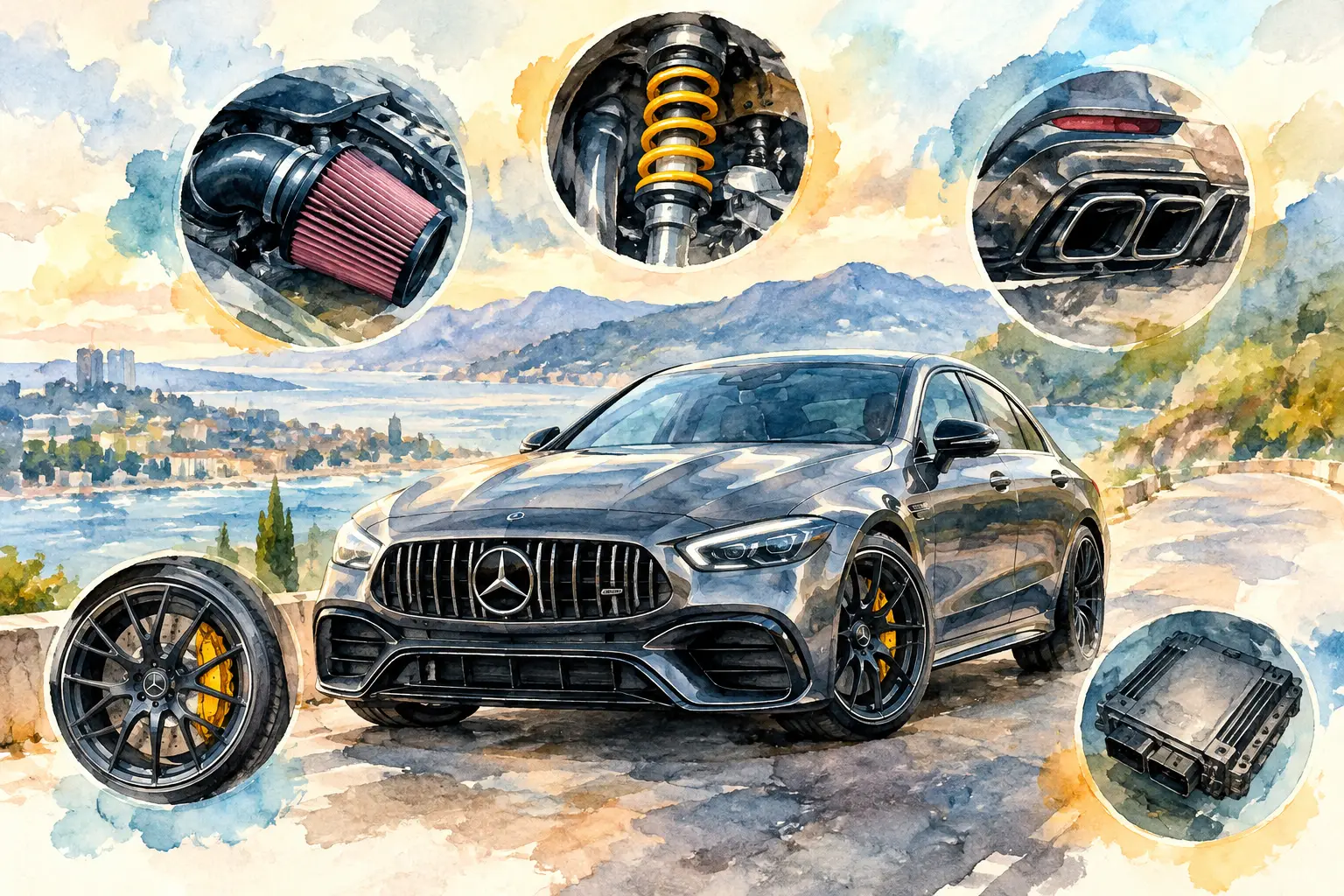
For many late-model turbocharged AMG models, an ECU tune offers the most noticeable performance change per dollar. The calibration can increase boost pressure, revise fuel and ignition mapping, and optimize torque delivery. The result may be stronger midrange pull, improved throttle response, and more urgent acceleration where drivers feel it most on the street.
The trade-off is that tuning should never be treated as a generic file installed without regard for the vehicle. Fuel quality, mileage, supporting hardware, climate, and intended use all matter. California’s warm weather and stop-and-go traffic can place real demands on a high-output engine. A responsible tuning strategy accounts for heat management and avoids chasing a peak dyno number at the expense of drivability.
Transmission calibration can also be worthwhile on applicable models. It may improve shift speed, adjust torque limits, and make the gearbox respond more predictably under spirited driving. On a daily-driven AMG, the goal should be clean, consistent behavior rather than harsh shifts every time the car leaves a stoplight.
Intake, exhaust, and cooling upgrades
An intake can improve induction sound and, depending on the platform, reduce restriction. Expectations should be realistic. On many modern AMGs, an intake alone will not create a dramatic horsepower increase. Its greatest benefit may be better turbo sound, improved airflow when paired with a tune, and a more engaging driving experience.
Exhaust modifications deserve the same practical mindset. A quality cat-back system can deliver a deeper tone, reduce weight, and complement other upgrades. However, exhaust volume is not the same as performance. A system that drones during a commute on Highway 101 can quickly become regrettable, especially in a vehicle that is otherwise quiet and refined.
Downpipes and other emissions-related components require extra care. Beyond potential tuning requirements, these changes can affect legality, emissions compliance, odor, noise, and long-term ownership experience. An experienced Mercedes specialist should explain those considerations before work begins, not after the vehicle has been modified.
Cooling upgrades become increasingly relevant as power rises. Heat exchangers, charge-cooling improvements, and related components can help a turbocharged AMG maintain more consistent performance during hot weather or repeated hard driving. They may not create the excitement of a larger horsepower claim, but they support repeatable results and protect the investment in other modifications.
Suspension, alignment, and tires
More power is only useful if the chassis can use it. In fact, tires and alignment are often the most effective first upgrades for owners who want their AMG to feel more precise without changing its personality.
A high-quality performance tire can improve traction, steering feedback, braking confidence, and wet-weather control. The ideal choice depends on whether the car is a year-round commuter, a weekend vehicle, or an occasional track participant. An extreme summer tire may offer impressive dry grip, but it can be less practical in colder or wet conditions and may wear more quickly.
Suspension upgrades range from modest lowering springs to adjustable coilovers and upgraded sway bars. Lowering springs can improve appearance and reduce body movement, but they must be selected carefully to preserve usable suspension travel and ride quality. With air suspension or electronically controlled dampers, compatibility is particularly important.
A performance alignment is a major part of the equation. Correct camber, toe, and corner balance where applicable can transform turn-in and stability. It also helps prevent premature tire wear, an expensive consequence of modifying ride height without proper setup.
Brakes built for how you drive
Most AMG models leave the factory with capable braking systems. For normal street driving, fresh OEM-quality pads, rotors, fluid, and proper inspection may be all that is needed. If the car sees mountain roads, repeated high-speed braking, or track days, upgrades can improve heat resistance and pedal consistency.
Performance brake pads may provide stronger bite and better fade resistance, but they can produce more dust, noise, and rotor wear. High-temperature brake fluid is useful for demanding conditions, yet it should be changed on an appropriate schedule. The right brake package is not always the most aggressive one. It is the one that matches the vehicle’s use and the owner’s tolerance for street-driving compromises.
Protect Reliability and Resale Value
The most successful AMG builds remain serviceable. That means choosing proven components, documenting the work, retaining factory parts when practical, and avoiding modifications that make future diagnosis unnecessarily difficult.
It also means being candid about warranty and insurance considerations. Certain modifications can affect warranty coverage related to a failure, and an insurance carrier may need to know about significant performance upgrades. These issues are not reasons to avoid modifying your vehicle. They are reasons to make informed decisions before the work begins.
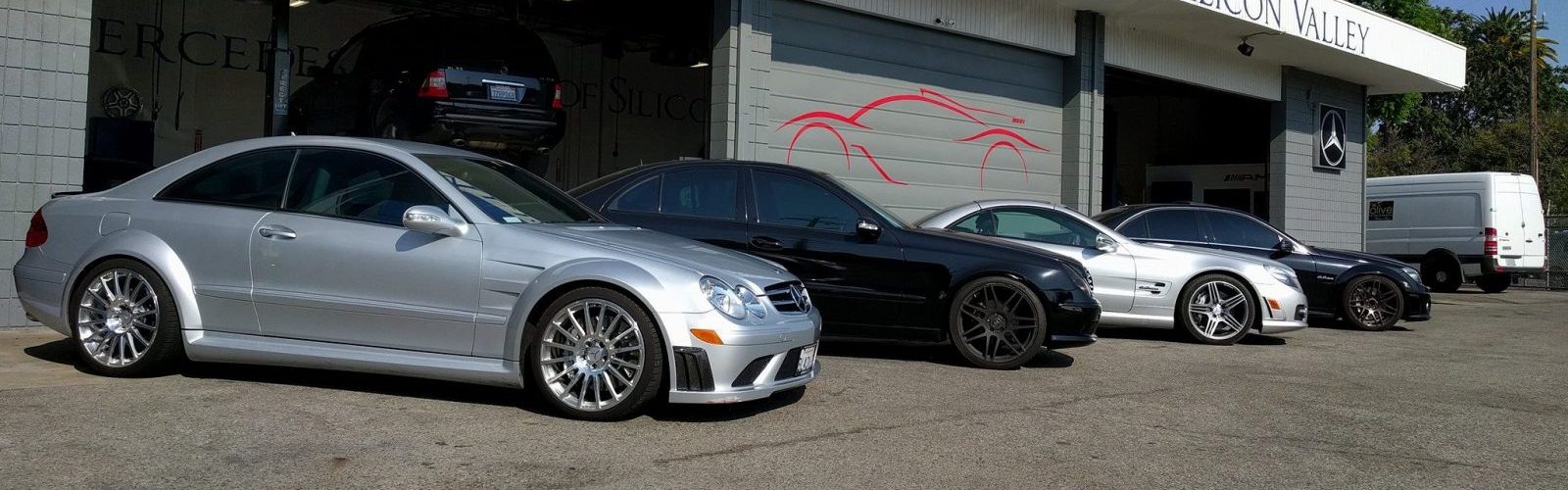
At Mercedes Service of Silicon Valley, performance work is approached with the same diagnostic discipline used for maintenance and repair. As Northern California headquarters for HD Tuning, the focus is on building a package that fits the car and the owner, rather than selling upgrades that do not serve a clear purpose.
Choosing the Right Upgrade Path
A practical daily-driver path might start with baseline maintenance, premium tires, a thoughtful ECU calibration, and brake fluid suited to the vehicle’s use. An owner seeking a more focused weekend car may add cooling improvements, a performance alignment, suspension upgrades, and brake components that tolerate higher temperatures.
For track use, the conversation should become more detailed. Driver experience, safety equipment, tire temperature management, fluid service intervals, and track-specific brake preparation all matter as much as horsepower. A vehicle that is enjoyable for one fast lap but overheats or fades after several sessions needs a different plan.
The best modification is the one you will appreciate every time you drive the car, not just the one that produces the biggest number on paper. Start with a clear goal, address maintenance honestly, and choose upgrades that make your AMG faster, more confident, and still unmistakably enjoyable to own.