If you own a Mercedes, the repair shop vs dealership maintenance decision usually gets real right after a warning light comes on or your Service A or B reminder pops up. That is when the marketing fades and the practical questions start. Who actually knows your vehicle? Who will use the right parts and fluids? Who will tell you what needs attention now, what can wait, and what is not necessary at all?
For Mercedes owners in Silicon Valley, this is rarely just about finding the cheapest invoice. It is about protecting a sophisticated vehicle that depends on correct diagnostics, brand-specific procedures, and consistent maintenance history. The better question is not whether a dealership or an independent shop is always better. It is which one is better for the kind of service your Mercedes needs right now.
Repair shop vs dealership maintenance for Mercedes owners
A dealership has obvious advantages. It represents the brand, follows manufacturer procedures, and usually has direct access to the latest service information, recalls, and model-specific updates. For very new vehicles, warranty-covered repairs, or issues tied directly to factory campaigns, the dealership is often the logical first stop.
But dealership service is not the only path to proper Mercedes care. A specialized independent repair shop can offer the same level of technical discipline if it is built around Mercedes expertise rather than general automotive work. That distinction matters. A true Mercedes specialist is not guessing their way through your car. They understand common platform issues, know the service intervals, use OEM-quality parts and approved fluids, and have the diagnostic equipment needed to work on modern systems correctly.
Where owners get into trouble is assuming every independent shop is equal. A general repair facility that works on every make may be fine for basic maintenance on a simple commuter car. A late-model Mercedes with advanced electronics, air suspension, turbocharged engines, driver assistance systems, or AMG performance components is a different standard entirely.
Cost is only one part of the equation
Most drivers start here, and that makes sense. Dealership maintenance and repairs often carry higher labor rates, larger overhead, and a more standardized pricing structure. That does not automatically mean the work is overpriced, but it does mean the final bill is often higher.
An independent Mercedes specialist can frequently offer better value without cutting corners. Lower overhead can translate into more reasonable labor rates, and a focused shop may be more willing to prioritize repairs based on actual condition rather than pushing every recommended item at once. That kind of transparency matters when your vehicle needs more than one service in a single visit.
Still, cheaper is not always better. If a shop lowers the estimate by using inferior parts, generic fluids, or incomplete diagnostics, the savings disappear fast. Mercedes vehicles are sensitive to maintenance quality. The wrong fluid specification or a rushed diagnosis can create bigger costs later.
The real cost comparison should include four things: the labor rate, the quality of parts and fluids, the accuracy of the diagnosis, and whether the recommendation list reflects what your car truly needs. Owners who focus only on the number at the bottom of the estimate sometimes miss the bigger expense.
Expertise can matter more than the building
There is a common assumption that dealership technicians always know Mercedes vehicles best. Sometimes that is true. But the badge on the building is not the whole story. What matters is who is actually working on your car.
A specialized independent shop with factory-trained technicians and years of Mercedes-focused experience can be every bit as capable as a dealership, and in some situations more consistent. Independent specialists often see the same models and recurring issues over and over, especially when they work exclusively on one brand. That kind of repetition builds practical knowledge you cannot fake.
It also changes the service experience. At a dealership, you may speak to an advisor who is handling a large volume of customers and multiple technician schedules. At a specialized shop, communication is often more direct. Questions get answered more clearly. Repair priorities can be explained in plain language. And when something is not urgent, you are more likely to hear that too.
For many Mercedes owners, that honest conversation is a deciding factor. Technical skill matters, but so does trust.
Diagnostics are where the difference shows up
Modern Mercedes vehicles are not maintained by feel alone. Proper diagnosis depends on manufacturer-level scan tools, testing procedures, software familiarity, and experience interpreting system behavior. Engine faults, transmission issues, electrical concerns, suspension problems, and safety system alerts can all overlap.
This is where a dealership has a natural advantage over a general repair shop. But a Mercedes specialist with genuine diagnostic capability closes that gap quickly. If the shop uses proper equipment and understands Mercedes systems deeply, you can get precise diagnosis without dealership pricing or dealership pace.
That is especially important when symptoms are intermittent. A vague check engine light, battery draw issue, ride height problem, or drivability complaint needs more than part swapping. It needs someone who knows where Mercedes vehicles commonly fail and how to confirm the root cause before repairs begin.
Warranty, recalls, and maintenance records
For cars still under factory warranty, owners often worry that using an independent shop could create problems. In most routine maintenance situations, that concern is overstated. You are generally not required to return to the dealership for standard service just to keep your warranty intact, as long as the work is done properly and documented with the correct parts and fluids.
That said, warranty repairs and recall work are different. If the issue is covered by Mercedes-Benz or tied to an open recall or factory service campaign, the dealership is usually the right choice because it can perform that work under the manufacturer program.
For everything outside those categories, a qualified independent can often handle maintenance and repair with the same level of care while maintaining clear records for your vehicle history. The key is documentation. Keep your invoices. Make sure the service performed is detailed. If your Mercedes is newer, this matters even more.
When the dealership makes the most sense
There are times when the dealership is simply the best fit. Brand-new vehicles with active warranty concerns belong there. Recall work belongs there. Some software updates and manufacturer-authorized campaigns may also be handled most efficiently there.
A dealership can also make sense for owners who prefer staying within the factory network for every stage of service, especially during the earliest years of ownership. That preference is reasonable. Some people value the consistency of the dealership process and are comfortable paying for it.
The point is not that dealerships are bad. It is that they are one option, not the only option.
When a Mercedes specialist repair shop is the better choice
Once a vehicle is out of warranty, the value of an experienced independent shop becomes much clearer. Routine maintenance, brake service, suspension repairs, oil leaks, engine diagnostics, electrical faults, and performance-related work can often be handled with more personal attention and better cost control.
This is where specialization really earns its place. A Mercedes-only or Mercedes-focused shop is usually better equipped to separate urgent needs from future watch items. Instead of a one-size-fits-all recommendation sheet, you get advice based on the condition, mileage, history, and use of your specific vehicle.
That matters for daily drivers and enthusiasts alike. A commuter E-Class with high freeway mileage has different priorities than a weekend AMG or a Sprinter used for business. The right shop understands those differences and builds a service plan around real-world use.
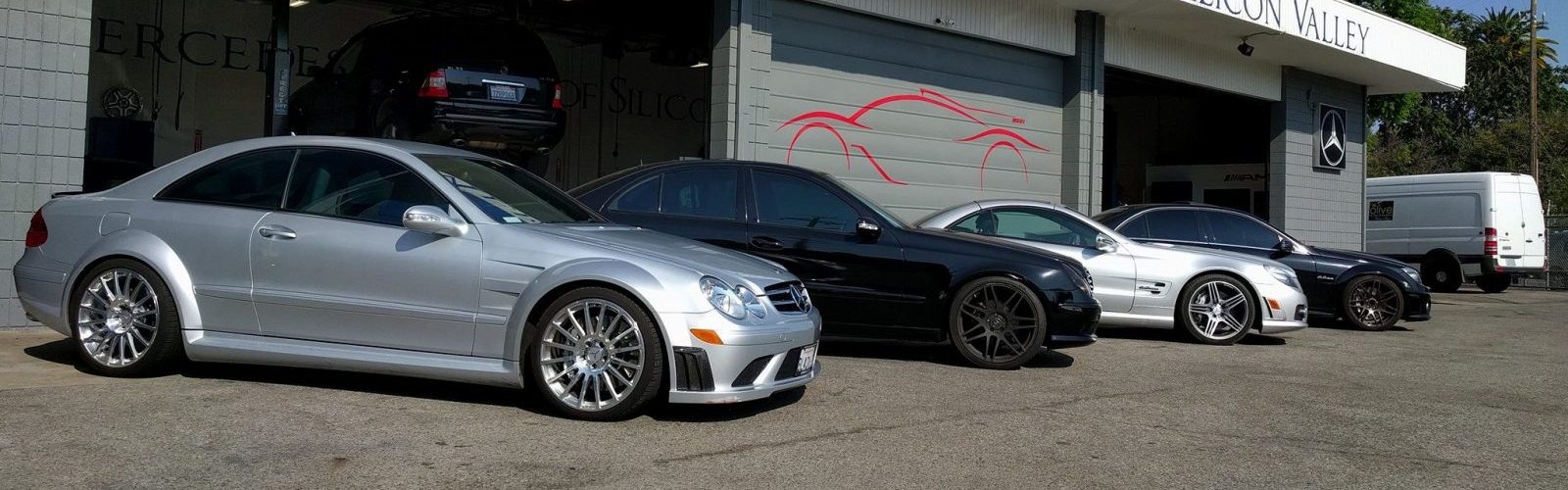
At Mercedes Service of Silicon Valley, that is exactly what many local owners are looking for – dealer-level Mercedes knowledge, factory-trained experience, OEM standards, and straightforward guidance without the dealership feel.
The best choice depends on what you value most
If your top priority is factory warranty administration, recall access, or direct manufacturer handling, the dealership has a clear role. If your priority is specialized attention, transparent recommendations, and strong Mercedes expertise at a more reasonable long-term cost, an independent specialist may be the better fit.
The smartest owners do not treat this as a loyalty test. They use each option where it makes the most sense. They go to the dealership when factory coverage or recall status makes that the right call. They rely on a trusted Mercedes specialist for ongoing maintenance, repairs, and the kind of detailed service relationship that keeps an aging luxury vehicle reliable.
Your Mercedes does not care whether the building says dealership or repair shop. It responds to the quality of the technician, the accuracy of the diagnosis, and the standards behind the work. Choose the place that gives your car what it actually needs, and choose the team that is willing to explain why.