
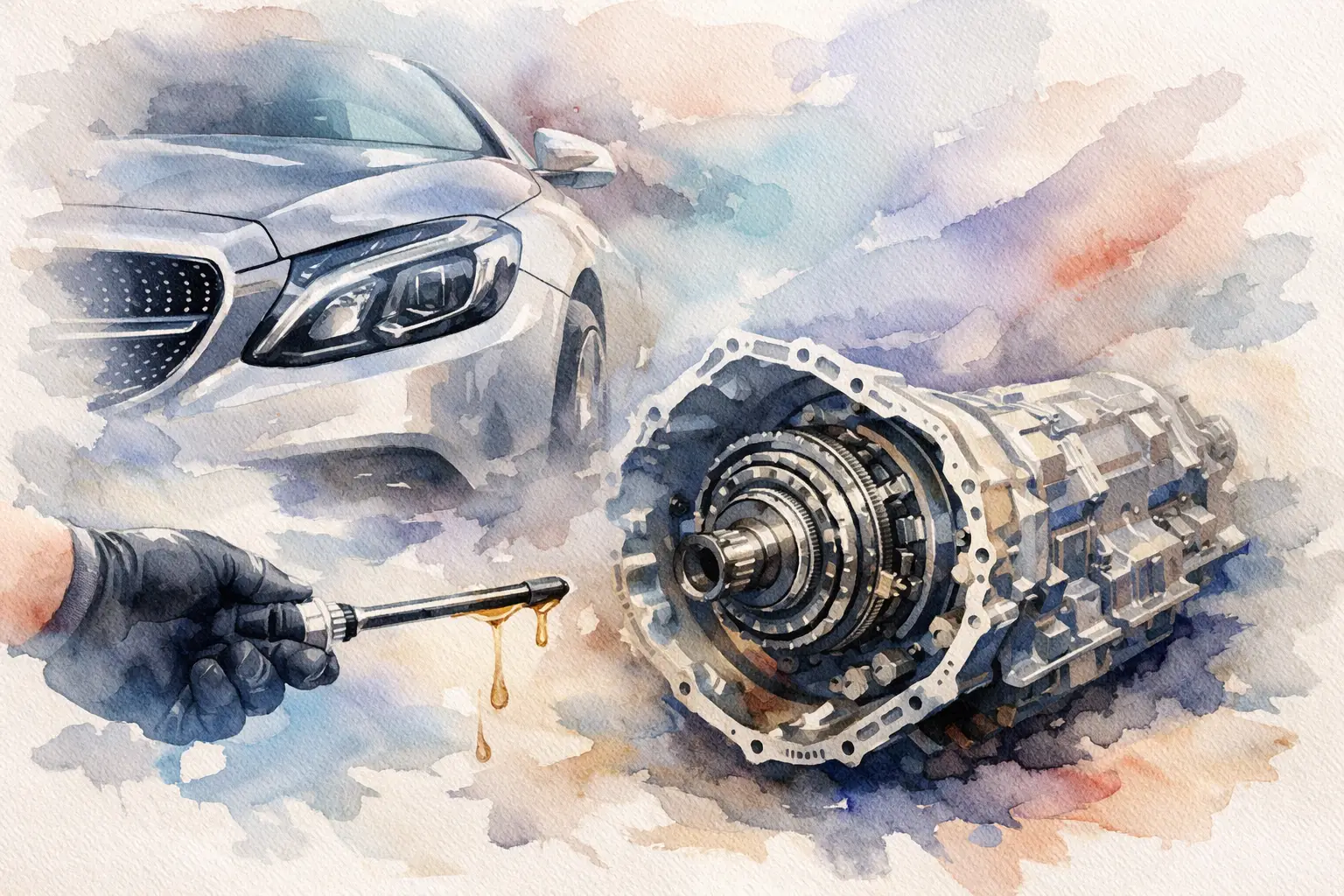
A Mercedes that hesitates between gears, shifts hard when cold, or feels oddly delayed pulling away from a stop is usually telling you something early. The right mercedes transmission service specialist knows those small changes matter, because with Mercedes-Benz vehicles, transmission behavior is tied to software, adaptation values, fluid condition, driving habits, and the exact model you drive.
Why Mercedes transmission work is different
Transmission service on a Mercedes is not the same as a basic drain-and-fill on a generic vehicle. Many Mercedes models use highly specific fluids, service intervals, fill procedures, and temperature-based checks that leave very little room for guesswork. On newer vehicles, the transmission also communicates constantly with other control modules, so a shift complaint may involve electronics, conductor plates, valve body issues, adaptation problems, or even drivability faults outside the transmission itself.
That is why specialization matters. A shop that works on every brand may be perfectly capable for routine maintenance, but Mercedes transmission diagnosis rewards brand-specific experience. The technician needs to recognize how a 7-speed behaves versus a 9-speed, how common faults show up in scan data, and when a symptom points to wear versus a software or electrical issue.
For owners in Silicon Valley, that difference is practical, not theoretical. It can mean the difference between catching a service need early and being sold a full transmission replacement that the car may not actually need.
What a mercedes transmission service specialist should actually do
A true specialist does more than change fluid and clear codes. The job starts with listening carefully to the customer and road-testing the vehicle under the conditions where the complaint happens. Some problems appear only at certain temperatures, during light throttle, or after extended highway driving. If the shop skips that part, the diagnosis can go sideways quickly.
From there, proper service usually includes factory-level diagnostics, inspection for leaks, fluid condition review, adaptation checks, and evaluation of fault history. On some Mercedes transmissions, fluid level must be checked within a precise temperature range. On others, service quality depends heavily on using the correct OEM-spec fluid and filter, not a universal substitute.
A good specialist also knows when not to oversell. Sometimes a vehicle needs a transmission service and adaptation reset. Sometimes it needs a conductor plate, connector sleeve repair, software work, or deeper internal repair. And sometimes the transmission is not the root cause at all. Honest diagnosis is what protects both the vehicle and the customer.
Common signs your Mercedes needs transmission attention
Most transmission failures do not begin as dramatic failures. They often start with subtle behavior changes that are easy to ignore if the car still drives.
You may notice a delay when shifting into drive or reverse, rough upshifts, flaring between gears, slipping under load, shuddering at cruising speed, or a warning light with reduced performance. Some drivers also report a feeling that the car is holding gears too long or shifting unpredictably after the battery has been disconnected or after other repairs.
It depends on the model and transmission type, but these symptoms should not be treated as normal aging. Mercedes vehicles are engineered to shift with a certain level of refinement. When that character changes noticeably, it is worth having the system evaluated before wear spreads or drivability gets worse.
Warning signs owners often miss
Minor leaks are one example. Transmission fluid seepage may not leave a dramatic puddle, but even a small leak can become a larger problem over time. Another overlooked sign is intermittent harsh shifting that only happens on the first drive of the day. Owners sometimes assume that is harmless, when in reality it can be one of the first useful clues.
An experienced Mercedes technician pays attention to those patterns because they help separate a maintenance issue from a more serious mechanical fault.
Why fluid and filter service matters more than many owners think
There is still confusion around so-called lifetime transmission fluid. In the real world, no fluid lasts forever, especially in a vehicle that sees stop-and-go commuting, warm California temperatures, spirited driving, or heavy load use. Heat, age, and contamination all affect how well the transmission performs.
Proper fluid and filter service helps preserve shift quality, hydraulic function, and internal component life. It is not a guaranteed fix for every complaint, especially if damage is already present, but it is one of the most important preventive services for many Mercedes models.
This is also where Mercedes-specific knowledge matters. Overfilling, underfilling, using the wrong fluid, or skipping key service steps can create new problems. A specialist follows the correct procedure for that exact transmission rather than treating every automatic transmission the same way.
Dealer expertise without dealer guesswork
Mercedes owners often assume the dealership is the only safe place for transmission work. That is understandable, but it is not always the best fit. What matters most is the quality of the diagnostic process, the technician’s Mercedes training, the equipment being used, and the honesty behind the recommendation.
A specialized independent shop can often provide the same level of technical care with a more direct and transparent customer experience. You are more likely to have a real conversation about what the vehicle needs now, what can wait, and what symptoms deserve close monitoring. That matters when transmission concerns can range from routine maintenance to major repair decisions.
For many owners, especially those keeping their Mercedes long term, that relationship becomes just as valuable as the repair itself. You want a shop that knows your vehicle history, understands how you use the car, and is willing to explain the trade-offs clearly.
Repair, rebuild, or replace? It depends
This is where customers need straight answers. Not every transmission issue requires a replacement unit. In some cases, targeted repair makes sense. In others, internal wear or debris means a more comprehensive solution is the smarter long-term choice.
The correct path depends on the transmission model, mileage, service history, fault data, and the condition of the fluid and internal components. If the problem is electronic or hydraulic and caught early, the repair may be far more manageable than owners fear. If the unit has been slipping for a long time or has suffered internal damage, delaying service usually raises the cost.
That is why a specialist should explain not just the diagnosis, but the reasoning. What failed? What evidence supports the recommendation? What are the risks of the lower-cost option versus the more complete repair? Clear answers build trust, especially with a premium vehicle.
Choosing the right Mercedes transmission service specialist
If you are comparing shops, look beyond general claims about foreign car repair. Mercedes transmission work deserves a shop that sees these vehicles every day, uses proper diagnostic equipment, and understands OEM service standards.
Factory-trained experience matters. So does familiarity with common Mercedes patterns, access to the right fluids and parts, and a willingness to road-test and verify repairs instead of guessing. Just as important, the shop should be comfortable saying when a service is preventive, when it is urgent, and when the customer can reasonably plan ahead.
That blend of technical depth and honesty is what many Mercedes owners are really searching for. In a region full of commuters, performance drivers, and families depending on their vehicles every day, confidence in the shop matters almost as much as the repair result.
Mercedes Service of Silicon Valley has built that kind of trust by focusing exclusively on Mercedes-Benz vehicles, using factory-level diagnostics and OEM-quality standards while keeping the experience more personal than the dealership model.
The value of acting early
Transmission problems rarely get cheaper by waiting. A small leak, aging fluid, or early shift-quality complaint may be manageable when addressed promptly. Once heat, contamination, or slipping accelerate internal wear, the options narrow.
The good news is that early action does not mean overreacting. It means having the car evaluated by someone who understands Mercedes systems well enough to tell the difference between a maintenance need, a repairable fault, and a major transmission issue. That kind of clarity saves money, protects the vehicle, and gives owners a more realistic plan for keeping their Mercedes on the road.
If your Mercedes is shifting differently than it used to, trust that instinct. The best time to talk to a specialist is usually before the problem becomes obvious to everyone else.