
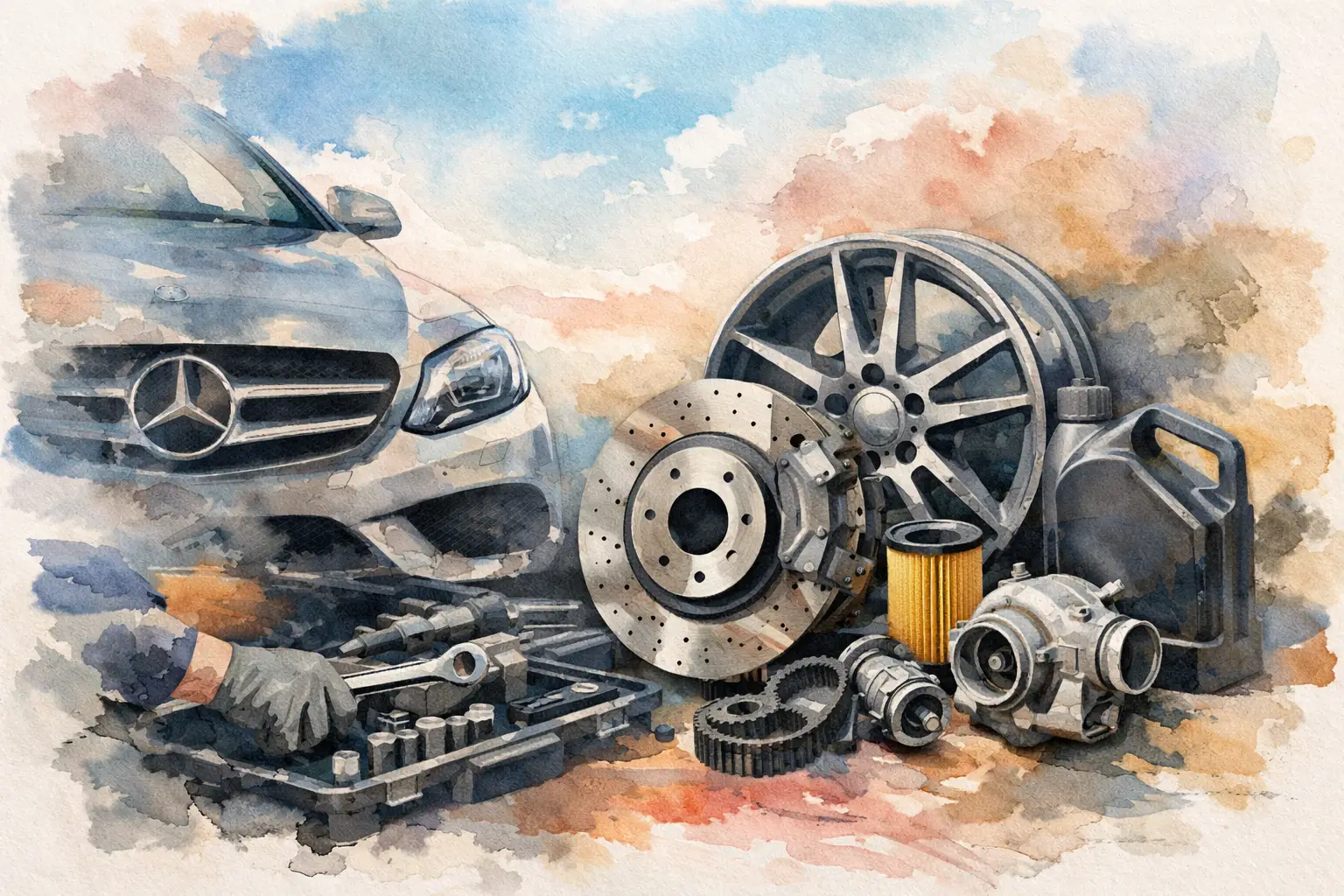
A Mercedes can hide problems well – right up until a warning light appears, a suspension component starts making noise, or a small oil leak turns into a bigger repair. In those moments, mercedes oem parts service matters more than most owners realize. The part that goes into your vehicle affects how it drives, how long the repair lasts, and whether the rest of the system continues to work the way Mercedes engineered it.
For many drivers in Silicon Valley, the real question is not whether to maintain the car. It is where to go for repairs and what quality of parts should be used. Dealer pricing is not the only path to proper Mercedes care, but cutting corners on parts can become expensive fast.
Why Mercedes OEM Parts Service Matters
Mercedes-Benz vehicles are built with tight tolerances, model-specific electronics, and systems that are designed to work together. That is true whether you drive a C-Class for a daily commute, an AMG with higher performance demands, a family SUV, or a Sprinter used for business. When one part is replaced with something that is slightly off in fit, material, or calibration, the issue often does not stay isolated.
OEM stands for Original Equipment Manufacturer. In practical terms, that means the replacement part is built to the same standard and specification intended for the vehicle. It is not just about branding. It is about proper function, predictable durability, and compatibility with surrounding components.
A cheap aftermarket part may seem like a small savings during one visit, but Mercedes owners often find the trade-off later. Premature wear, repeat labor, poor fitment, noise, drivability complaints, and even warning messages can all come from parts that were never quite right for the platform.
OEM vs Aftermarket – The Difference Is Real
Some aftermarket parts are acceptable in certain situations. That is the honest answer. Not every non-OEM part is automatically bad, and not every repair requires the highest-cost option available. But with Mercedes vehicles, the margin for error is smaller than it is on many mass-market cars.
Fit and Function
OEM components are made to fit correctly without improvisation. That matters with engine seals, suspension parts, filters, sensors, control arms, brake components, and electrical items. A part that installs easily and matches factory dimensions usually performs better and causes fewer downstream issues.
Electronics and Diagnostics
Modern Mercedes models rely on complex communication between modules, sensors, and control systems. If a replacement sensor sends inconsistent data or a component behaves outside expected parameters, the car may log faults even if the part is technically new. Proper diagnosis paired with OEM-quality replacement parts helps avoid chasing the same issue twice.
Longevity and Total Cost
The lowest invoice is not always the lowest ownership cost. If an aftermarket part fails early, you may pay for labor again, and in some cases a failed part can stress nearby components. OEM parts tend to make more sense for owners who plan to keep the vehicle, protect reliability, and avoid repeat visits for the same repair.
Where Mercedes OEM Parts Service Makes the Biggest Difference
There are a few areas where part quality matters especially strongly.
Braking is one of them. Mercedes brake systems are tuned for vehicle weight, stopping performance, and electronic safety integration. Pads and rotors that do not meet the right standard can change brake feel, increase noise, wear unevenly, or create excess dust and vibration.
Suspension is another. Control arms, bushings, air suspension components, and steering parts all affect ride quality and stability. A Mercedes that once felt composed and precise can quickly feel loose or unsettled when lower-quality parts are installed.
Engine and cooling system repairs are also high-stakes. Hoses, water pumps, thermostats, seals, and ignition components need to handle heat and pressure correctly. A part that fails early in these systems can leave you with much more than an inconvenience.
Electrical and safety systems deserve the same caution. Sensors, modules, switches, and batteries are not generic items on modern luxury vehicles. They need to work cleanly with the car’s software and diagnostic architecture.
Good Parts Still Need the Right Technician
Parts quality is only half the equation. Even the correct component can underperform if the diagnosis was wrong or the installation was rushed. Mercedes vehicles require a shop that understands the brand, has access to proper diagnostic equipment, and knows the patterns these cars develop over time.
That experience matters because Mercedes problems are not always obvious. A suspension warning may not mean the strut is the only issue. A coolant leak may start from a housing, seal, or related fitting that is easy to miss without Mercedes-specific familiarity. Replacing a part without understanding the system can waste money, even if the part itself is genuine.
A specialized independent shop can often offer the best balance here – factory-level knowledge, OEM parts and fluids, and a more personal approach than many owners get at a dealership. That means clearer recommendations, better communication, and a repair plan based on what the vehicle actually needs now versus what can reasonably wait.
Mercedes OEM Parts Service and Resale Value
Mercedes owners who keep service records usually understand this point quickly. Documentation showing quality maintenance and OEM parts use supports the vehicle’s long-term value. Buyers of used luxury vehicles want confidence that the car was not maintained on the cheap.
That does not guarantee a higher resale number by itself, but it can make your vehicle easier to sell and easier to stand behind. More importantly, you get the benefit while you still own it – better consistency, fewer shortcuts, and a service history that makes sense.
When OEM Is Non-Negotiable and When It Depends
There are cases where OEM should be the default. Engine management components, sensors, seals, cooling system parts, transmission-related items, brake components, and many suspension parts fall into that category. These systems are too closely tied to reliability, safety, or drivability to gamble on inconsistent quality.
Then there are situations where it depends. Cosmetic trim, certain wear items, or performance-related upgrades can be more flexible if the part source is proven and the use case is clear. Enthusiast owners sometimes choose non-OEM options intentionally for tuning or handling goals. The key is that those decisions should be informed, not accidental.
That is where honesty from your shop matters. You want a technician who can explain when OEM is worth insisting on, when an alternative might be acceptable, and why. A trustworthy shop does not push parts based on margin. It recommends them based on outcome.
What to Expect From a Quality Mercedes Parts and Service Experience
A proper service visit should feel organized, transparent, and specific to your vehicle. That starts with inspection and diagnosis, not guesswork. If a repair is needed, the explanation should connect the symptom, the failed component, and the recommended part choice in plain language.
You should also expect realistic advice. Not every issue is urgent, and not every recommendation belongs on the same invoice. For many owners, the best service experience is one where the shop helps prioritize safety, reliability, and budget without compromising standards.
At Mercedes Service of Silicon Valley, that philosophy is a major part of why owners stay for the long term. Mercedes drivers want expertise, but they also want straight answers. They want to know the repair was done properly, the parts were chosen for the right reason, and the person advising them understands both the vehicle and the cost of ownership.
Choosing a Shop for Mercedes OEM Parts Service
If you are comparing shops, ask a few direct questions. Do they specialize in Mercedes-Benz, or is your vehicle just one of many brands they see that week? Do they use factory-level diagnostic equipment? Do they regularly install OEM parts and the correct fluids? Can they explain the difference between what is urgent and what can be monitored?
Those answers will tell you a lot. Mercedes ownership does not have to mean dealer-only service, but it should mean brand-specific care. The right shop protects the engineering you paid for and helps you avoid the false economy of parts and repairs that do not hold up.
The best time to think about part quality is before a breakdown, not after one. When your Mercedes is maintained with the right components and the right judgment, it stays what it was meant to be – refined, reliable, and rewarding to drive.