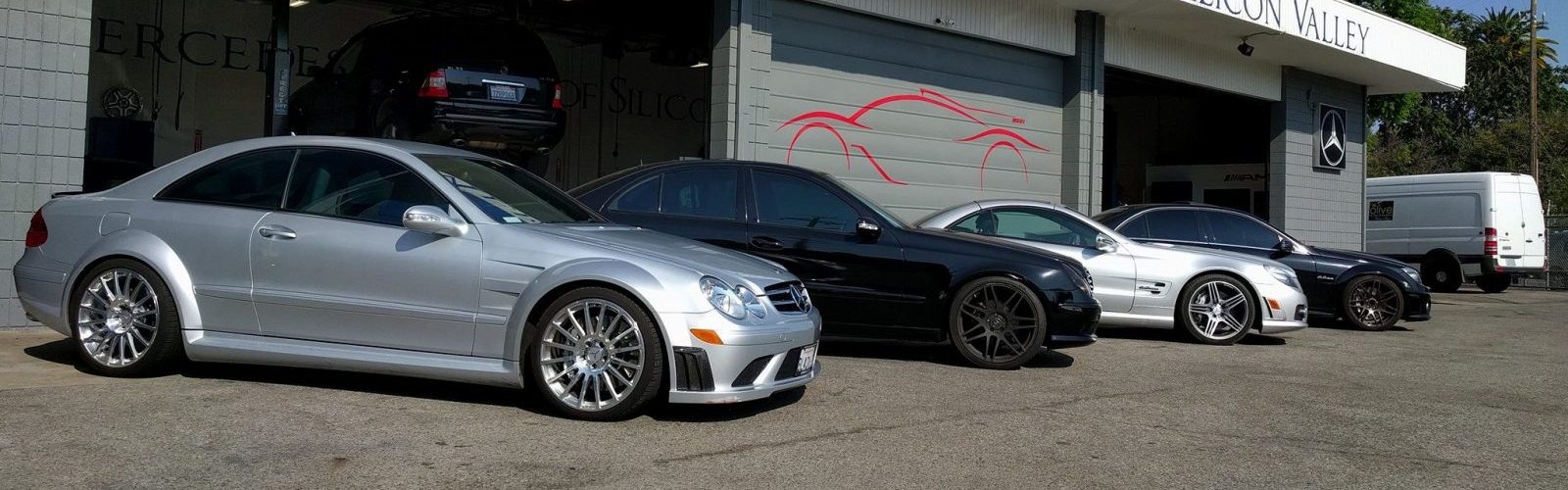

A Mercedes-Benz that feels strong, smooth, and predictable is usually more satisfying than one that simply posts a bigger horsepower number. The real question in Mercedes tuning vs stock is not whether more power is better. It is whether the vehicle’s current condition, intended use, and supporting systems make tuning the right decision for you.
For some Silicon Valley drivers, factory calibration is exactly right: quiet on the commute, refined in traffic, and engineered for a long service life. For others, especially owners of turbocharged Mercedes and AMG models, a professionally developed tune can deliver noticeably sharper response and stronger midrange acceleration without changing the character that made them choose a Mercedes in the first place.
Mercedes Tuning vs Stock: Start With Your Priorities
A stock Mercedes operates with the calibration approved by Mercedes-Benz for a broad range of climates, fuel quality, driving habits, emissions requirements, and ownership patterns. The factory software must account for a driver in stop-and-go San Jose traffic, another traveling at high altitude, and another operating the vehicle in extreme heat. It also leaves room for variations in maintenance and fuel quality.
That conservative margin is one reason many modern Mercedes engines respond well to tuning. A quality ECU calibration can revise boost targets, ignition timing, throttle mapping, torque limits, and other parameters within a carefully evaluated range. On a turbocharged model, the difference is often most apparent in the middle of the rev range, where the car can pull harder for freeway merges and passing.
But stock is not a compromise by default. It is often the best choice for an owner who values factory behavior above all else, has a remaining factory warranty, drives primarily short trips, or simply does not need additional performance. Keeping a vehicle stock also makes its maintenance history and operating configuration straightforward for future buyers.
The better choice depends on how you use your Mercedes, not on what another owner has done to theirs.
What You Gain From a Proper Mercedes Tune
The strongest case for tuning is not peak horsepower. It is usable performance. A well-matched calibration can reduce the hesitation some drivers feel from factory throttle mapping, provide more immediate torque, and make the engine feel more responsive in normal driving.
On certain Mercedes-Benz platforms, this can be a meaningful change without adding hardware. Turbocharged four-cylinder, six-cylinder, V8, and AMG applications can see improved output because the engine already has forced induction and electronic control systems that can be recalibrated. Results vary substantially by engine, model year, fuel used, ambient temperature, and the tune selected.
A tune may be especially appealing if you regularly carry passengers or cargo, drive a heavier SUV, or want more confidence when merging onto Highway 101 or I-880. The benefit is often a stronger, less strained feeling under part-throttle acceleration rather than an excuse to drive aggressively.
Tuning Should Preserve Drivability
A Mercedes tune should feel integrated, not disruptive. Excessive throttle sensitivity, rough cold starts, inconsistent shifting, or warning lights are not signs of a performance upgrade done well. The goal is controlled power delivery that remains smooth enough for daily driving.
Transmission behavior matters, too. Modern Mercedes vehicles use engine and transmission programming together to manage torque. Increasing engine output without considering the transmission, drivetrain, cooling system, and service history can create an experience that is less refined than stock. A responsible recommendation evaluates the whole vehicle, not just the advertised gains.
What Stock Calibration Still Does Best
Factory software remains the benchmark for broad operating conditions and predictable ownership. It is designed around Mercedes-Benz emissions standards, factory durability targets, service procedures, and the vehicle’s original powertrain configuration.
For a commuter vehicle with irregular maintenance history, stock calibration is usually the prudent place to stay until all baseline concerns are addressed. An engine with oil leaks, worn spark plugs, weak ignition components, cooling issues, stored fault codes, or transmission concerns should not be tuned to mask a problem or add load to an already compromised system.
Stock also makes sense for owners who prefer to use any grade of fuel without thinking about it, want the most conservative operating strategy available, or plan to sell the vehicle soon. There is real value in keeping a Mercedes simple, documented, and consistent with its original specification.
That does not make stock boring. Many Mercedes-Benz vehicles have exceptional factory performance, particularly later AMG models. In those cases, maintenance, tires, brake condition, alignment, and driver confidence may make a greater real-world difference than additional engine power.
The Trade-Offs Owners Need to Understand
Tuning is not a universal upgrade. It changes the demands placed on components, even when the calibration is developed conservatively. More torque can place additional stress on the transmission, differential, axles, tires, and engine cooling system. The effect depends on the platform, driving style, mileage, and how consistently the vehicle has been maintained.
Fuel quality becomes more important as well. Many performance calibrations are designed around premium fuel, and some are optimized for specific octane levels. Using lower-quality fuel than required can reduce performance and may increase the likelihood of ignition correction under load.
Warranty and compliance also deserve a direct conversation. Modifications can affect warranty coverage for a related repair, and dealerships or manufacturers may identify non-factory software during diagnostic work. Emissions regulations matter in California, particularly when a modification changes emissions-related equipment or software. Owners should understand the legal and practical implications before choosing any performance modification.
Insurance and resale are additional considerations. Some buyers specifically seek a tuned Mercedes, while others want an unmodified example. Keeping detailed records of maintenance and modifications helps either way.
A Tune Is Only as Good as the Vehicle Beneath It
Before recommending performance software, a Mercedes specialist should establish that the car is healthy. Advanced diagnostics can identify stored faults, misfires, boost deviations, sensor issues, fuel-system concerns, and transmission adaptation problems that may not yet trigger an obvious warning light.
Routine service is part of performance preparation. Fresh engine oil of the correct specification, properly gapped spark plugs where applicable, clean filters, sound engine mounts, a healthy cooling system, and up-to-date transmission service all support consistent operation. For higher-mileage vehicles, this preparation is not optional. It is the foundation for reliable performance.
This is where generic tuning can fall short. A file that works on one car may not be appropriate for another vehicle with different mileage, maintenance needs, fuel availability, or existing modifications. The safest route is a vehicle-specific assessment followed by a calibration suited to the owner’s goals.
Hardware Changes Are Not Always Necessary
Some owners assume they need an intake, exhaust, downpipes, or other parts before tuning. That is not always true. A stock-hardware tune may be the most sensible option for a daily-driven Mercedes because it keeps noise, emissions considerations, and installation complexity lower.
Hardware can be appropriate when it supports a defined performance goal, but every change should have a purpose. An exhaust should not create drone that makes a daily commute unpleasant. Intake modifications should not introduce heat-related performance loss or fitment problems. Parts selection should match the platform and calibration rather than follow a checklist from the internet.
Choosing the Right Path for Your Mercedes
If your Mercedes is newer, fully maintained, and you want a more responsive driving experience, tuning may be worthwhile. If it has unresolved maintenance needs, uncertain history, or a warranty you want to preserve as completely as possible, stock calibration is usually the smarter choice for now.
There is also a middle ground. You can restore factory performance first. Many owners are surprised by how much better a Mercedes feels after addressing overdue service, worn plugs, tired mounts, contaminated fluids, brake concerns, or alignment issues. A car that is operating exactly as Mercedes-Benz intended is the right baseline for any future decision.
At Mercedes Service of Silicon Valley, the conversation begins with how you drive, what condition your vehicle is in, and what you expect from the upgrade. The right recommendation should be honest enough to include, “stay stock for now,” when that is the best way to protect your investment.
Whether you keep the factory calibration or choose measured performance gains, give your Mercedes the attention that decision requires. The best driving experience comes from a car that is healthy, properly serviced, and set up for the road you actually drive.