That slight front-end dip over freeway expansion joints, the extra bounce after a speed bump, the uneven stance in your driveway – Mercedes owners usually notice suspension problems before a warning light says anything. If you are searching for a mercedes suspension repair shop, you are probably already feeling the difference in how the car rides, turns, brakes, or sits. On a Mercedes-Benz, those changes should never be brushed off as normal wear.
Suspension problems on these vehicles are not just about comfort. They affect tire wear, steering response, braking stability, driver confidence, and in some cases ride-height control systems that rely on precise electronic and hydraulic operation. A Mercedes sedan, SUV, AMG, or Sprinter is engineered to feel composed for a reason. When that composure starts to fade, the fix needs to be just as precise as the original design.
What a Mercedes suspension repair shop should actually understand
Not every European auto shop is truly set up for Mercedes suspension work. That matters because Mercedes-Benz uses a wide range of suspension designs across model lines and generations, from conventional struts and control arms to AIRMATIC, ABC on older models, adaptive dampers, and model-specific chassis calibrations. The diagnosis is rarely as simple as replacing one noisy part.
A proper Mercedes specialist understands how suspension symptoms overlap. A clunk might come from a worn control arm bushing, a failed ball joint, a loose sway bar link, a collapsed air strut mount, or even an issue that is felt through the suspension but starts elsewhere in the chassis. Uneven tire wear could point to alignment, but it may also be the result of worn suspension joints that prevent the alignment from holding.
That is where factory-trained experience makes a real difference. Mercedes systems are engineered with tighter expectations for ride feel, geometry, and electronic integration than many mainstream vehicles. Diagnosing them correctly requires more than general mechanical skill. It takes familiarity with how these cars age, how specific models fail, and which repairs solve the cause instead of the symptom.
Common signs you need a Mercedes suspension repair shop
Some suspension problems show up gradually, which is why owners often adapt to them without realizing how much ride quality has changed. Others are impossible to ignore. If your Mercedes feels harsher, less controlled, or visibly uneven, it is worth having it inspected sooner rather than later.
Watch for a vehicle that leans to one side after parking overnight, especially on air suspension models. Noticeable nose-diving under braking, excessive body roll in corners, or a floaty highway feel can point to weakened dampers or failing chassis components. Clunking over bumps, creaking while turning, and steering that feels loose or delayed usually indicate wear in suspension arms, joints, or bushings.
Tire wear is another major clue. If the inside edge of a tire is wearing rapidly or the car pulls even after a recent alignment, there may be play in the suspension that is preventing proper geometry. On newer Mercedes models, suspension issues can also trigger ride height warnings, chassis fault messages, or adaptive damping alerts.
The trade-off with waiting is simple. A small issue like one worn joint or one leaking air strut often turns into a more expensive repair when other components are forced to compensate. Delayed suspension work can also damage tires that still have usable life left.
Why Mercedes suspension diagnosis is not a guess-and-swap job
A trustworthy mercedes suspension repair shop does not start by selling parts. It starts with inspection, measurement, and model-specific diagnosis. That may include checking bushings for separation, testing for play under load, inspecting struts for leakage, evaluating air suspension behavior, scanning chassis control modules, and verifying ride height data where applicable.
This matters because replacing the wrong part wastes money and does not restore the way the vehicle should drive. It is common for drivers to come in thinking they need shocks when the real issue is worn thrust arms, or to assume an air compressor has failed when the problem begins with a leaking air spring. On Mercedes vehicles, several parts can create similar symptoms.
There is also the question of repair strategy. Sometimes the right approach is targeted replacement of a failed component. Other times, especially on higher-mileage vehicles, it makes more sense to replace related wear items together to avoid repeating labor and chasing handling inconsistencies. Good advice is not about selling the biggest ticket. It is about recommending what fits the condition of the car, the owner’s goals, and the vehicle’s remaining service life.
Dealer, general shop, or Mercedes specialist?
For suspension work, this choice affects both cost and outcome. The dealership typically has brand knowledge and access to the right information, but many owners want a more personal experience, better communication, and a more measured approach to what actually needs to be done. A general repair shop may be less expensive up front, but if the team lacks Mercedes-specific experience, diagnosis can take longer and repairs can become less predictable.
A dedicated independent Mercedes shop often hits the balance owners are looking for. You want technicians who know the brand, use genuine diagnostic equipment, understand OEM standards, and can explain the issue clearly without turning every visit into a sales presentation. That combination is especially valuable with suspension concerns, where ride complaints can be subjective but the repair has to be exact.
For Silicon Valley drivers, this is not only about fixing a problem. It is about preserving what made the vehicle worth buying in the first place. The right shop should respect that.
How a Mercedes suspension repair shop should approach parts and repairs
Parts quality matters more than many drivers realize. Mercedes suspension systems are sensitive to tolerances, rubber compound quality, damping rates, and electronic compatibility. Low-grade aftermarket parts may cost less at the counter, but they can introduce noise, shorten service life, or leave the vehicle feeling different from how it was engineered.
OEM parts and fluids are usually the right baseline, especially for critical suspension and chassis components. In some cases, high-quality aftermarket upgrades may make sense for performance-oriented drivers, but that depends on the model and the goal. An AMG owner chasing sharper response has different priorities than a commuter trying to restore factory ride quality on an E-Class or GLE.
This is where honest consultation matters. A good shop explains whether the best choice is OEM replacement, a known high-quality equivalent, or a performance-focused option. It also explains trade-offs clearly. Firmer is not always better. Lower is not always better. The right repair is the one that fits how you actually use the vehicle.
Choosing the right Mercedes suspension repair shop in Silicon Valley
Look for specialization first. Mercedes-Benz vehicles reward technicians who work on them every day, not occasionally. Ask whether the shop handles both mechanical and electronically controlled suspension systems, whether it uses Mercedes-capable diagnostic equipment, and whether technicians have factory training or deep brand-specific experience.
Then pay attention to how the shop communicates. A quality operation should be able to show you what failed, explain what is urgent versus what can wait, and outline why a recommendation makes sense. Suspension repairs can range from straightforward to involved, so transparency matters just as much as technical ability.
Local reputation also counts. In a relationship-driven market like San Jose and the surrounding communities, long-term customer trust usually reflects consistency. Shops that build loyalty tend to be the ones that diagnose accurately, stand behind their work, and avoid padding estimates with unnecessary add-ons.
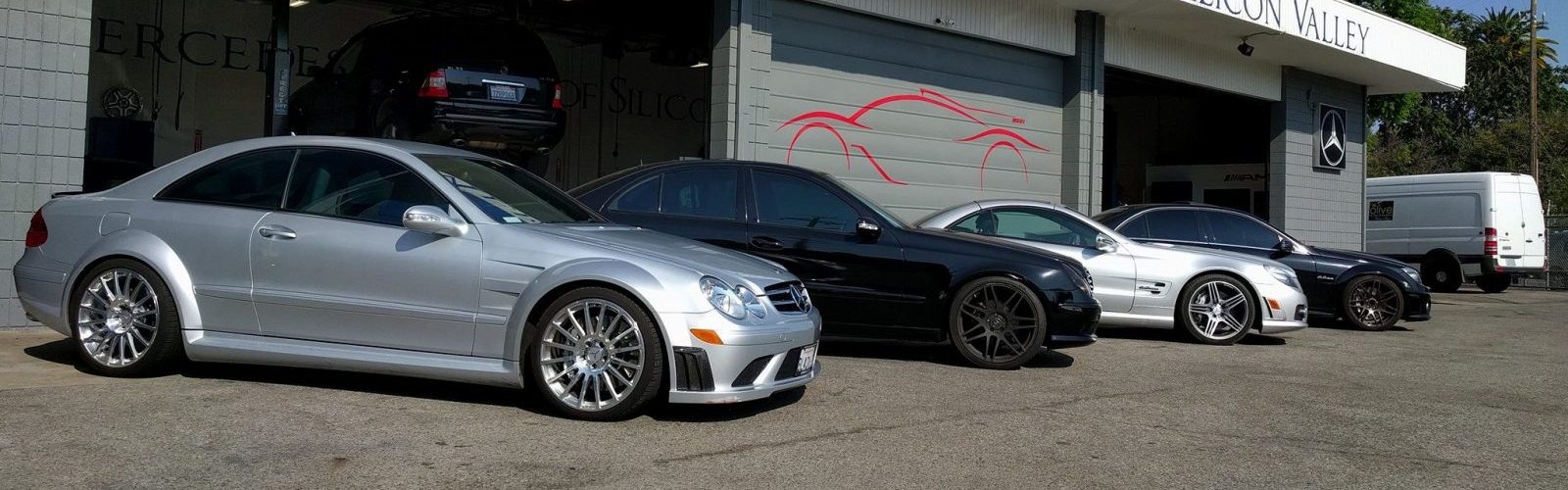
That is one reason many local Mercedes owners turn to Mercedes Service of Silicon Valley. The appeal is not just dealer-level expertise outside the dealership. It is the combination of factory-trained knowledge, OEM-minded repair standards, and a family-business approach that treats customers like long-term clients rather than one-time tickets.
What to do if your Mercedes suspension feels off right now
Do not wait for the problem to become obvious to everyone else. If the ride feels harsher, lower, noisier, or less stable than it used to, schedule an inspection while the issue is still isolated. Suspension problems tend to spread costs over time – into tires, steering wear, alignment issues, and reduced safety margins.
A Mercedes should feel controlled, planted, and refined. When it does not, that change is telling you something useful. The right shop will know how to read it, fix it properly, and help you keep the car driving the way a Mercedes should.