A warning light appears on your Mercedes-Benz, the service reminder is due, or a small drivability concern starts getting worse on the way to work. Your first decision is not which repair to approve. It is where to take the vehicle. The independent Mercedes shop versus dealer decision affects cost, convenience, communication, and the quality of the diagnosis behind every recommendation.
For Mercedes owners in San Jose and throughout Silicon Valley, there is no one-size-fits-all answer. A dealership can be the right place for certain warranty and recall work. A qualified independent specialist can be the stronger choice for routine maintenance, complex repairs, long-term ownership, and personalized service. The key is understanding what each option is designed to do – and what your particular vehicle needs.
Independent Mercedes Shop Versus Dealer: The Core Difference
A Mercedes-Benz dealership is part of the manufacturer’s franchised network. It has direct access to factory systems, new-vehicle warranty processes, recall campaigns, and manufacturer programs. Dealerships also tend to have large service departments built to handle a high volume of vehicles, from basic maintenance to warranty repairs.
An independent Mercedes shop operates differently. The best specialists focus deeply on the Mercedes platform rather than servicing every make on the road. Their technicians build familiarity with common patterns across E-Class sedans, GLE and GLB SUVs, AMG models, Sprinters, and older Mercedes vehicles that may no longer receive much dealership attention.
That specialization matters, but it is not enough by itself. A quality independent should have factory-trained experience, Mercedes-capable diagnostic equipment, access to accurate repair information, and a clear policy on OEM parts and fluids. Without those foundations, lower pricing can become false economy.
When a Dealership Makes Sense
Dealership service has distinct advantages, especially when your vehicle is under its original factory warranty or a certified pre-owned warranty. If a repair is covered, the dealership is usually the most direct path to completing it with manufacturer authorization. Recall work and certain service campaigns also belong at an authorized dealer because those repairs are handled through Mercedes-Benz programs.
A dealership may also be appropriate for a concern involving a newly released model, an unusual factory software issue, or a manufacturer goodwill request. The dealership has a formal relationship with Mercedes-Benz and can submit documentation through channels that independents do not control.
For some owners, the dealership’s amenities, loaner availability, and large service capacity are meaningful conveniences. If you need a same-day shuttle, a loaner arrangement, or service while traveling far from home, a dealership may be practical.
Those benefits come with trade-offs. Dealer service departments generally carry higher overhead, and their labor rates often reflect it. The advisor you speak with may not be the technician diagnosing your vehicle. Recommendations can also be presented in packaged menus that are efficient for a busy service lane but not always tailored to the real condition of your specific Mercedes.
Where an Independent Specialist Often Has the Edge
For out-of-warranty maintenance and repair, a dedicated independent Mercedes shop often provides a more direct and cost-conscious ownership experience. The goal is not to skip needed work. It is to separate what is urgent, what should be monitored, and what can reasonably wait.
That conversation matters on a premium vehicle. A Mercedes may need brake service, suspension work, cooling-system repairs, transmission servicing, electrical diagnostics, or scheduled maintenance at the same visit. A trusted specialist should explain how those items relate to safety, reliability, and the vehicle’s current condition rather than treating every recommendation as equally urgent.
An independent shop also has the opportunity to build a long-term service history with the owner. When the same team has maintained your vehicle through several visits, they can recognize changes in oil consumption, battery health, brake wear, tire patterns, suspension behavior, and recurring fault codes. That context can lead to better recommendations and fewer surprises.
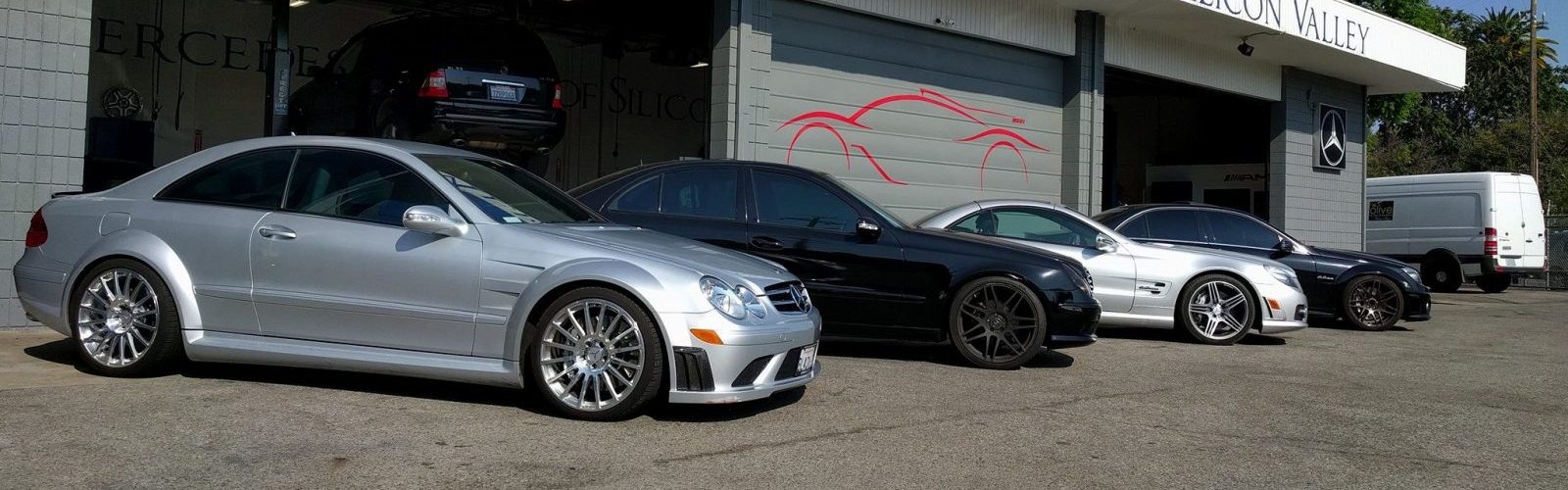
At Mercedes Service of Silicon Valley, that specialist approach is built around Mercedes-trained experience, genuine diagnostic equipment, OEM-quality parts and fluids, and straightforward communication. Whether the vehicle is a daily-driven C-Class or an enthusiast-owned AMG, the standard should be the same: diagnose accurately, repair correctly, and explain the reason for the work.
Diagnostic Capability Is More Important Than the Sign on the Building
Modern Mercedes-Benz vehicles are highly integrated machines. Engine performance, transmission operation, driver-assistance features, air suspension, climate control, battery management, and safety systems depend on modules that communicate constantly. A generic scan tool may identify a fault code, but it may not reveal why that code appeared or what testing is required before replacing a part.
This is where owners should look beyond the independent Mercedes shop versus dealer label. Ask what diagnostic equipment the shop uses and whether the technicians understand Mercedes test plans, live data, control-module communication, programming requirements, and electrical fault tracing.
A strong independent specialist does not guess at expensive components. For example, a check engine light could be related to a sensor, vacuum leak, fuel-pressure concern, wiring issue, or a software-related fault. Replacing parts based on a code alone can become expensive quickly. Proper diagnosis takes equipment, experience, and the willingness to verify the repair before returning the car.
The same standard applies to safety systems. If a warning involves ABS, airbags, steering, collision avoidance, or advanced driver assistance, the repair facility should have the technical capability to diagnose the system correctly and perform any required calibrations or verification procedures.
Parts, Fluids, and the Cost Question
The lowest estimate is not always the best value, particularly on a Mercedes-Benz. Correct fluid specifications, quality filters, properly engineered brake components, and accurate installation procedures protect performance and reliability. Using the wrong transmission fluid, coolant, or engine oil can create problems that cost far more than the initial savings.
Dealerships commonly use genuine Mercedes-Benz parts. Reputable independent specialists can also source genuine parts or high-quality OEM components, depending on the repair and the owner’s preference. OEM means the part is made to the original manufacturer’s standards, often by the same supplier that produced the factory component.
The honest question is not simply, “Is this part cheaper?” It is, “Is this the right part for this vehicle, and what is the warranty?” A good shop will explain the options when options truly exist. For some repairs, genuine Mercedes-Benz parts are the clear choice. For others, a proven OEM equivalent can make sense without compromising the job.
Independent shops frequently provide savings through more focused labor rates, lower overhead, and repair plans tailored to the vehicle rather than a preset menu. That does not mean every service will cost less. Complex electrical diagnosis, performance work, or major engine and chassis repairs require skilled time wherever they are performed. The value comes from accurate work and transparent priorities.
Protecting Your Warranty and Service Records
Many owners worry that using an independent shop will automatically void the factory warranty. In general, having routine maintenance performed outside the dealership does not void warranty coverage simply because the work was done elsewhere. However, the maintenance must be performed correctly, using appropriate parts and fluids, and records should be retained.
Keep copies of invoices that show the date, mileage, services performed, and parts or fluids used. If a warranty repair is needed later, those records help document responsible ownership.
There is an important exception in practice: if a repair is clearly covered by a manufacturer warranty, extended warranty, recall, or service campaign, start with the dealer or warranty administrator. An independent specialist can help identify concerns and advise you, but authorization and reimbursement requirements may direct covered work to a particular facility.
How to Choose the Right Shop for Your Mercedes
Whether you choose a dealer or independent, pay attention to the questions the service team asks. A thoughtful advisor wants to know when the symptom occurs, whether warning lights are active, what recent repairs were completed, and how the vehicle is used. That is a better sign than a quick promise to replace a part before the car has been inspected.
Look for clear estimates, technician credentials, brand-specific experience, and a willingness to distinguish maintenance from repair. You should understand what is needed now, what can be planned for later, and what the consequences are if you wait. If an estimate feels vague or pressured, ask for clarification before authorizing work.
For performance-oriented owners, ask whether the shop understands your exact configuration. Modified and tuned Mercedes vehicles need informed service decisions. Software changes, upgraded hardware, and AMG-specific systems can affect diagnostic strategy and parts selection. A shop that treats every Mercedes the same may miss the details that matter most.
The best place for your vehicle is the one that earns your confidence with evidence: correct diagnostics, appropriate parts, skilled workmanship, and honest communication. When your Mercedes needs attention, choose the team that will treat the repair as part of your vehicle’s long-term health, not just another ticket in the service lane.