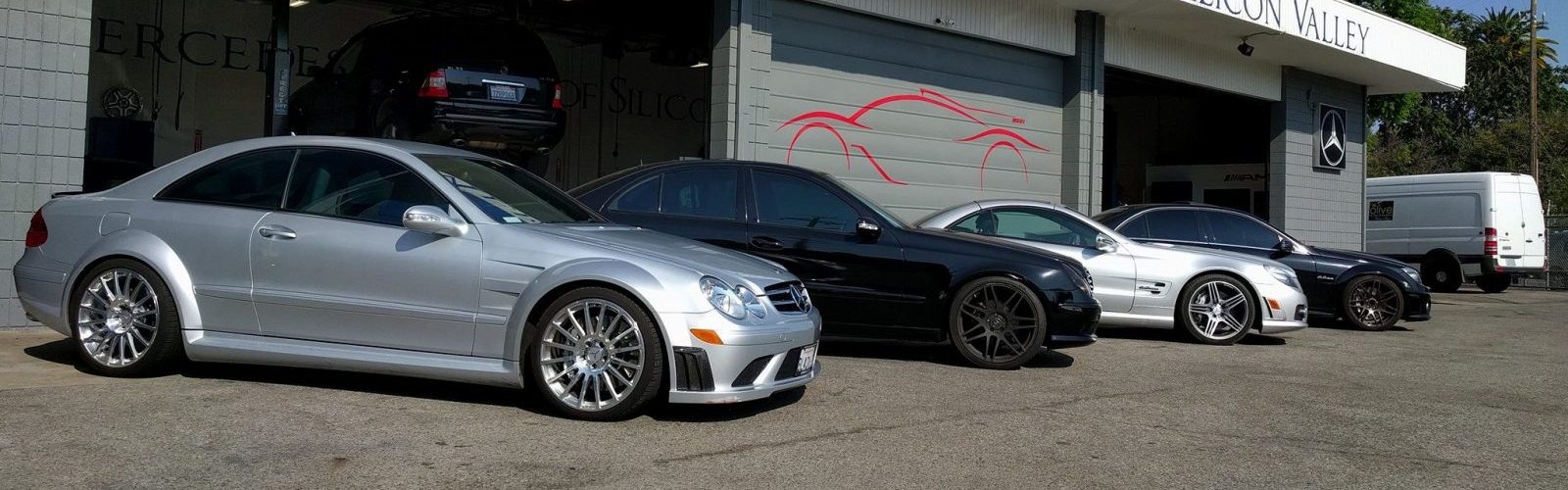

When an AMG feels flat after a few years on the road, owners notice it right away. Throttle response softens, shifts lose some edge, and the car that once felt razor-sharp starts feeling merely quick. That is usually the point when people start searching for an AMG tuning specialist California owners can trust, not just a shop that can load a file and send the car back out.
AMG tuning is not the same as generic performance work. These vehicles are engineered with tight integration between engine management, transmission behavior, cooling systems, drivability, traction logic, and long-term reliability. If you are driving an AMG in San Jose, Fremont, Milpitas, Gilroy, or the broader Silicon Valley area, the right tuning partner should understand the full Mercedes platform, not just horsepower numbers.
What sets an AMG tuning specialist in California apart
A true AMG tuning specialist in California starts with platform knowledge. That means knowing Mercedes factory systems, common AMG weak points, service history patterns, and the difference between a car that is ready for calibration and one that first needs maintenance or repair.
That matters because tuning can magnify existing issues. A weak ignition component, a marginal intercooler pump, old spark plugs, a boost leak, or transmission adaptation problems may not seem dramatic in daily driving. Add more power, torque, and heat, and those small issues can quickly become expensive ones.
A specialist also understands that not every AMG owner wants the same result. Some want stronger midrange power for highway merging and daily commuting. Others want a more aggressive feel under full throttle. Some care most about maintaining factory-like manners with better response. Good tuning starts with that conversation, not with a generic promise of maximum gains.
Why Mercedes-specific experience matters before tuning
Mercedes-Benz vehicles, especially AMG models, are heavily system-dependent. The engine control unit does not operate in isolation. It works alongside transmission programming, stability systems, turbo control strategies, fuel delivery, temperature management, and a wide network of sensors. When one part of that system is off, the car may still run, but it will not perform the way it should.
That is why factory-trained Mercedes experience matters. A shop that already services and repairs Mercedes vehicles every day is in a much better position to evaluate whether an AMG is truly ready for performance tuning. Dealer-level diagnostics, OEM-quality parts, and brand-specific repair knowledge are not extras here. They are part of doing the job correctly.
For many owners, this is also where trust comes in. You do not want to hear that your car needs a long list of parts just because you asked about tuning. You want clear, honest guidance about what is necessary, what is recommended, and what can wait. That kind of transparency is what separates a long-term Mercedes specialist from a volume-based performance shop.
The right tuning process is more than software
Good AMG tuning begins with inspection and baseline verification. Before any software changes are made, the vehicle should be checked for fault codes, boost integrity, ignition health, fluid condition, service history, and any known drivetrain concerns. If the car is not healthy in stock form, tuning is the wrong first step.
Once the foundation is confirmed, software calibration should match the vehicle’s condition and the owner’s goals. On a street-driven AMG, drivability often matters as much as peak numbers. Clean cold starts, predictable part-throttle behavior, smooth shift strategy, and consistent performance in real California traffic are what make a tuned car enjoyable every day.
This is one reason why off-the-shelf solutions can be hit or miss. Some work well. Some feel overly aggressive. Some chase impressive dyno claims while sacrificing refinement. With AMG vehicles, the best results usually come from tuning supported by Mercedes-specific knowledge and real-world testing, not from the most dramatic marketing language.
Performance gains are only part of the story
Most AMG owners ask about horsepower first, and that makes sense. But the real value of quality tuning often shows up in how the car responds. Better torque delivery, sharper throttle mapping, more decisive acceleration through the midrange, and improved shift behavior can change the entire driving experience.
That said, more power always comes with trade-offs. Depending on the platform, supporting hardware, fuel quality, and driving style, additional stress on the engine and drivetrain may increase wear over time. That does not mean tuning is a bad choice. It means tuning should be approached with realistic expectations and proper maintenance.
For example, a well-maintained AMG with conservative, well-developed tuning can remain an excellent street car. A neglected AMG with overdue service and unresolved warning signs can turn into a problem very quickly. The calibration matters, but the condition of the vehicle matters just as much.
How to evaluate an AMG tuning specialist California owners are considering
Start with specialization. If a shop works on every brand under the sun, AMG tuning may be just one small part of what they do. There is nothing inherently wrong with that, but Mercedes-AMG owners usually benefit more from a shop that already lives inside the brand every day.
Then look at the shop’s service foundation. Can they diagnose complex Mercedes issues in-house? Do they use proper diagnostic equipment? Are they comfortable handling maintenance, engine repair, chassis work, and electrical troubleshooting, not just performance installs? A tuning shop with no real repair depth can leave you in a difficult position if a hidden issue shows up during the process.
It is also worth paying attention to how they talk about results. A reliable specialist will explain gains clearly, discuss fuel requirements, mention limitations, and be honest about whether your particular AMG platform is a good candidate for additional modifications. If everything sounds easy, instant, and risk-free, be cautious.
California driving conditions change what good tuning looks like
California is a unique environment for performance cars. Heat, traffic, varied fuel conditions, long commutes, and stop-and-go driving all influence how an AMG should be calibrated and maintained. A tune that feels exciting on a short pull may not feel so great in daily Bay Area driving if it creates rough manners, heat soak issues, or inconsistent throttle behavior.
That is why local experience matters. An AMG owner in Silicon Valley often wants a car that can handle weekday commuting, weekend drives, and occasional spirited use without becoming temperamental. The best tuning approach is usually one that respects how the car is actually used.
For many drivers, that means balancing stronger performance with factory-like control and reliability. It may also mean addressing maintenance items before adding power, or choosing a moderate calibration instead of the most aggressive option available. A specialist should be able to explain that balance without overselling either side.
Tuning and maintenance should work together
One of the biggest mistakes AMG owners make is treating tuning and maintenance as separate decisions. In reality, they should support each other. Spark plugs, coils, filters, fluids, mounts, cooling components, and transmission service all play a role in how well a tuned AMG performs.
That is where a Mercedes-focused independent shop has a real advantage. When the same team can inspect, diagnose, service, and tune the car, the process becomes much more consistent. You are not bouncing between one shop for software, another for diagnostics, and another for basic Mercedes service.
At Mercedes Service of Silicon Valley, that integrated approach is a big part of what owners value. Factory-trained Mercedes expertise, honest recommendations, and performance capability under one roof make a difference, especially for drivers who want more out of their AMG without giving up peace of mind.
The best AMG tune is the one that fits your car
There is no single best tune for every AMG. The right answer depends on the model, mileage, service history, supporting hardware, and what you actually want from the vehicle. A lower-mileage weekend car may be a candidate for a different setup than a daily-driven AMG sedan with years of commuting behind it.
That is why the best specialists ask more questions than they answer in the first five minutes. They want to know how the car has been maintained, what fuel you use, whether there are existing drivability issues, and whether your priority is peak output, smoother response, or stronger everyday performance. That conversation is not a sales delay. It is how good decisions get made.
If you are considering tuning, start with the shop that can look at the whole Mercedes, not just the software file. The right specialist will tell you when the car is ready, when it is not, and how to build performance the smart way so the AMG still feels like an AMG every time you start it.