A Mercedes cooling system can look perfectly normal right up until it is not. The temperature gauge may stay steady, there may be no warning light, and the coolant reservoir may still appear full. But coolant does more than prevent freezing: it carries heat away from critical engine components, protects aluminum from corrosion, lubricates the water pump, and helps prevent internal deposits. That is why the question, when should Mercedes coolant flush service be scheduled, deserves a vehicle-specific answer rather than a generic mileage rule.
For most Mercedes-Benz owners, coolant service is a long-interval maintenance item, not something required every year. Still, waiting for an overheating event is the expensive way to address it. The correct schedule depends on your model year, engine, coolant specification, service history, and how the vehicle has been maintained.
Mercedes Coolant Flush Timing Depends on the Vehicle
Mercedes-Benz has used different cooling-system designs and coolant specifications across generations. A newer C-Class, an older E-Class, an AMG model, a Sprinter, and a plug-in hybrid do not necessarily share the same maintenance interval or procedure. The factory maintenance booklet and the vehicle’s VIN-specific service information should always lead the decision.
As a practical rule, many late-model Mercedes vehicles use long-life coolant designed to remain in service for many years. Depending on the model and factory schedule, replacement may be called for around the 10- to 15-year mark, sometimes with a mileage consideration as well. That does not mean every vehicle should automatically wait that long. If the cooling system has been opened for a radiator, water pump, thermostat, hose, or engine repair, fresh Mercedes-approved coolant may be appropriate sooner.
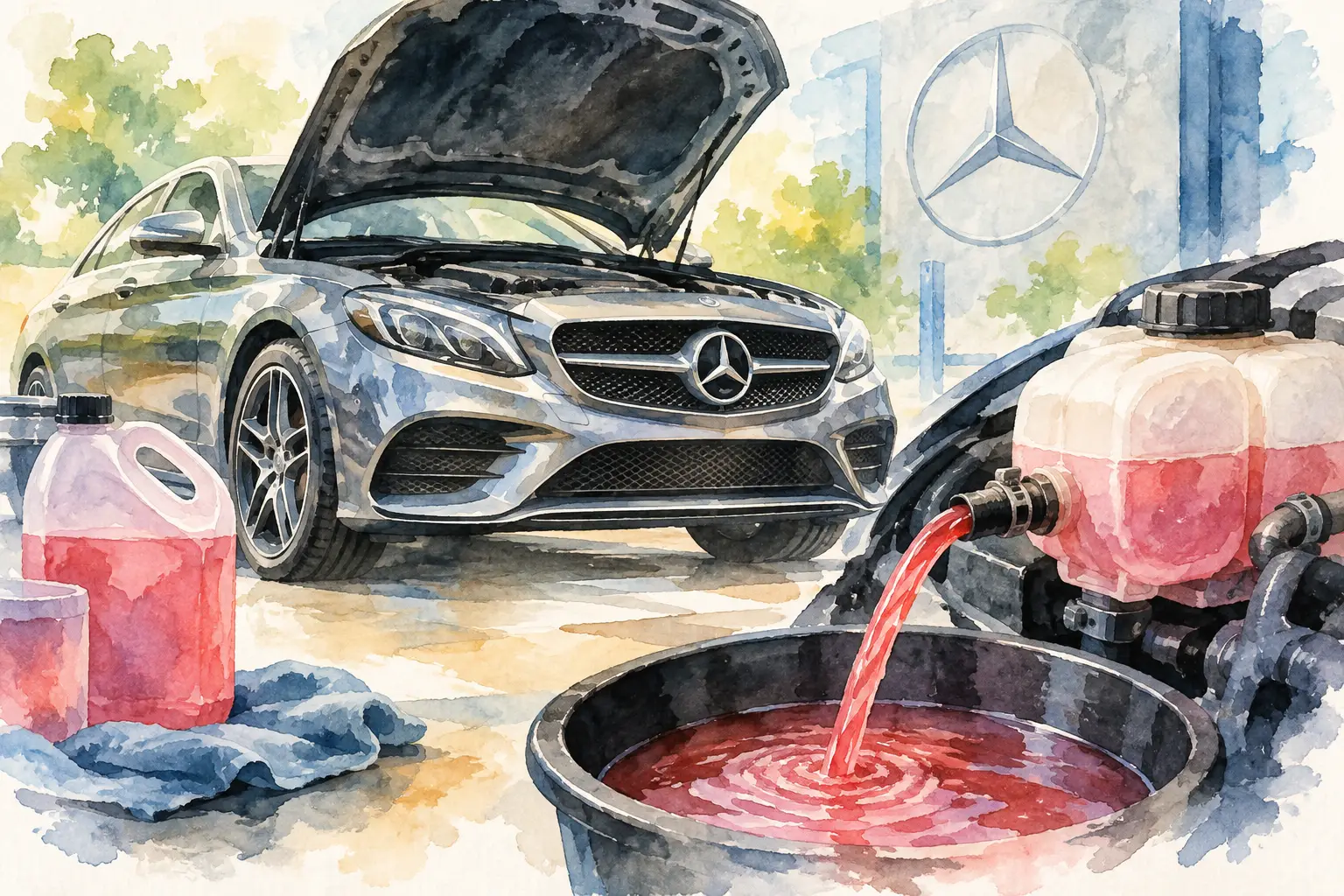
A true flush is not always necessary. If the existing coolant is clean, correctly specified, and the system has no contamination, a controlled drain, refill, vacuum fill, and bleed procedure may be the right service. A flush becomes more relevant when the wrong coolant has been used, corrosion or sediment is present, oil has entered the cooling system, or the service history is unknown. The goal is not to sell a larger service. It is to restore proper protection without introducing unnecessary risk to an aging cooling system.
Signs Your Mercedes May Need Coolant Service Early
Time and mileage matter, but condition matters too. Mercedes owners should not ignore a coolant warning simply because the vehicle is not yet due according to a general interval. A low coolant message, rising operating temperature, a sweet smell near the front of the vehicle, visible residue around hoses, or coolant beneath the vehicle all deserve prompt attention.
Coolant condition can also tell part of the story. Clean coolant should have a consistent appearance, with no oily film, rusty discoloration, floating particles, or sludge. A low level may point to a small external leak, but it can also be caused by a failing expansion tank cap, a water pump seep, a radiator leak, or an internal engine concern. Adding coolant without finding the reason for the loss can mask a problem that becomes much more costly later.
Pay particular attention if you purchased a used Mercedes with incomplete records. A pre-owned vehicle may have received a universal aftermarket coolant, tap water, or an incorrect mixture at some point. Coolant color alone is not a reliable way to identify what is inside the system. Blue, pink, green, and clear-looking formulas can vary by manufacturer and chemistry. The correct choice is the coolant that meets the Mercedes-Benz specification for that VIN.
Why Mercedes-Approved Coolant Matters
Modern Mercedes engines use a significant amount of aluminum and operate within tightly managed temperature ranges. The coolant must protect metal surfaces, seals, and passages while remaining compatible with the vehicle’s materials. Using a generic coolant because it is labeled “universal” may save a few dollars at the counter, but the chemistry may not provide the corrosion protection required for the specific engine and radiator components.
The water quality used to mix concentrated coolant matters as well. Minerals in ordinary tap water can leave deposits inside narrow coolant passages, the heater core, and the radiator. Mercedes-approved coolant mixed to the proper ratio with suitable water provides freeze protection, boil-over resistance, and the additive package needed for long-term corrosion control.
There is also a difference between topping off and servicing the system. A small top-off using the correct premixed fluid can be appropriate after verifying the engine is cold and the level is genuinely low. Repeated top-offs are not maintenance. They are a reason to inspect the system and perform a pressure test if needed.
The Cooling System Should Be Inspected, Not Just Drained
A quality Mercedes coolant service starts with an inspection. The technician should check the coolant level and condition, inspect hoses and connections, examine the expansion tank and cap, and look for evidence of leakage around the radiator, water pump, and thermostat housing. On many models, advanced diagnostics can also reveal stored temperature-related faults or cooling fan concerns that are not yet obvious to the driver.
The refill procedure is equally important. Air trapped in a cooling system can create hot spots, weak cabin heat, inaccurate level readings, and overheating concerns. Mercedes vehicles often require specific bleeding steps, and many benefit from vacuum filling to reduce the chance of air pockets. The system should then be brought to operating temperature and rechecked for proper circulation, fan operation, leaks, and coolant level.
This attention to procedure matters even more on turbocharged engines and AMG applications, where heat management is central to performance and durability. It also matters for drivers who spend long periods in Silicon Valley traffic, face high summer temperatures, or use their Mercedes for commuting, family travel, or commercial work. Stop-and-go operation puts more demand on the cooling system than a simple mileage number suggests.
When a Coolant Flush Is the Wrong First Step
A flush is not a cure for every cooling-system problem. If the engine is overheating, the vehicle needs diagnosis before coolant is exchanged. The root cause could be a thermostat, water pump, cooling fan, radiator restriction, electronic control issue, leak, or combustion-gas intrusion. Fresh coolant alone will not correct a mechanical or electrical failure.
Likewise, an aggressive chemical flush can be a poor choice for some older vehicles. If a system has severe corrosion or neglected maintenance, cleaning agents may loosen debris that later blocks a passage or exposes a weakened seal. In those cases, the best repair may involve replacing compromised components, carefully cleaning the system, and refilling it with the proper coolant. The right approach depends on what an inspection finds.
Hybrid, plug-in hybrid, and electric Mercedes models require additional caution. These vehicles may have separate thermal circuits for the engine, battery, power electronics, or cabin climate system. Each circuit can have its own fluid requirements and service procedure. That work should be handled by technicians familiar with the specific Mercedes platform.
A Sensible Plan for Mercedes Owners
Check your owner’s literature and maintenance records first. If the coolant has never been replaced and the vehicle is approaching its factory age or mileage recommendation, schedule an inspection and discuss the appropriate service. If records are missing, have the coolant tested and the system evaluated rather than assuming it is fine or immediately authorizing a flush.
If your vehicle recently had cooling-system repairs, confirm that the correct Mercedes-approved fluid was installed and that the system was properly filled and bled. If the coolant warning returns after a top-off, do not keep adding fluid. Find the source of the loss.
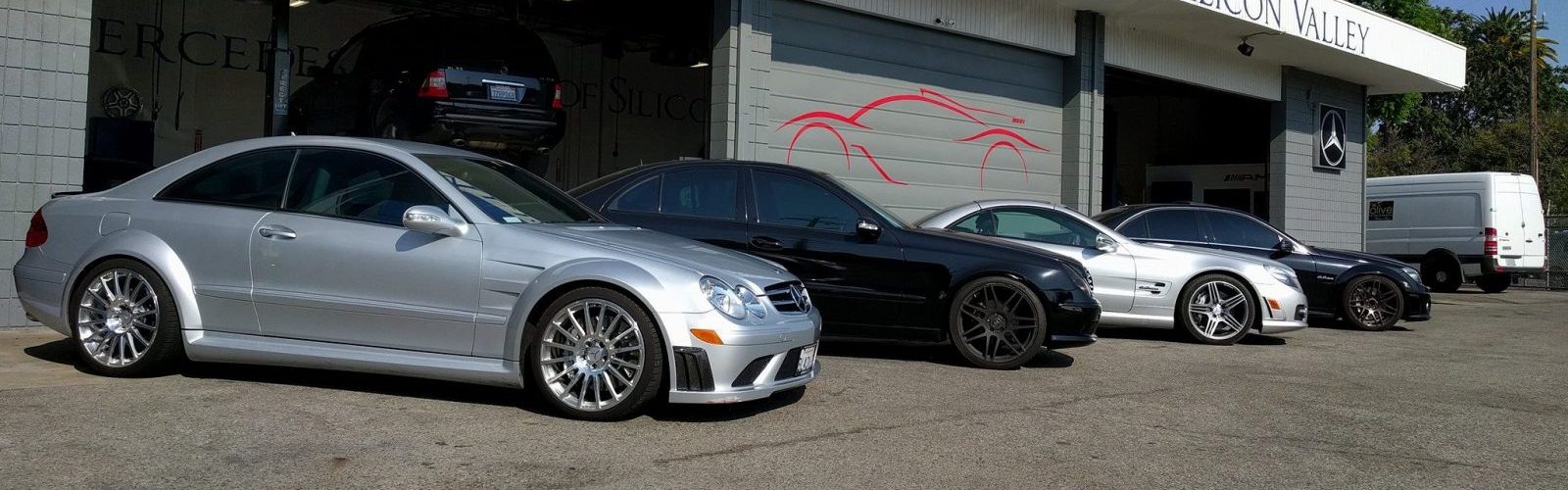
At Mercedes Service of Silicon Valley, we evaluate coolant condition, factory maintenance requirements, and the full cooling system before recommending service. That approach helps owners avoid both neglected maintenance and unnecessary work.
Your Mercedes does not need coolant attention every time it comes in for an oil service. It does need the right attention at the right time. A quick, informed inspection before a long drive, a hot summer, or a major maintenance visit can protect the engine you rely on every day.