
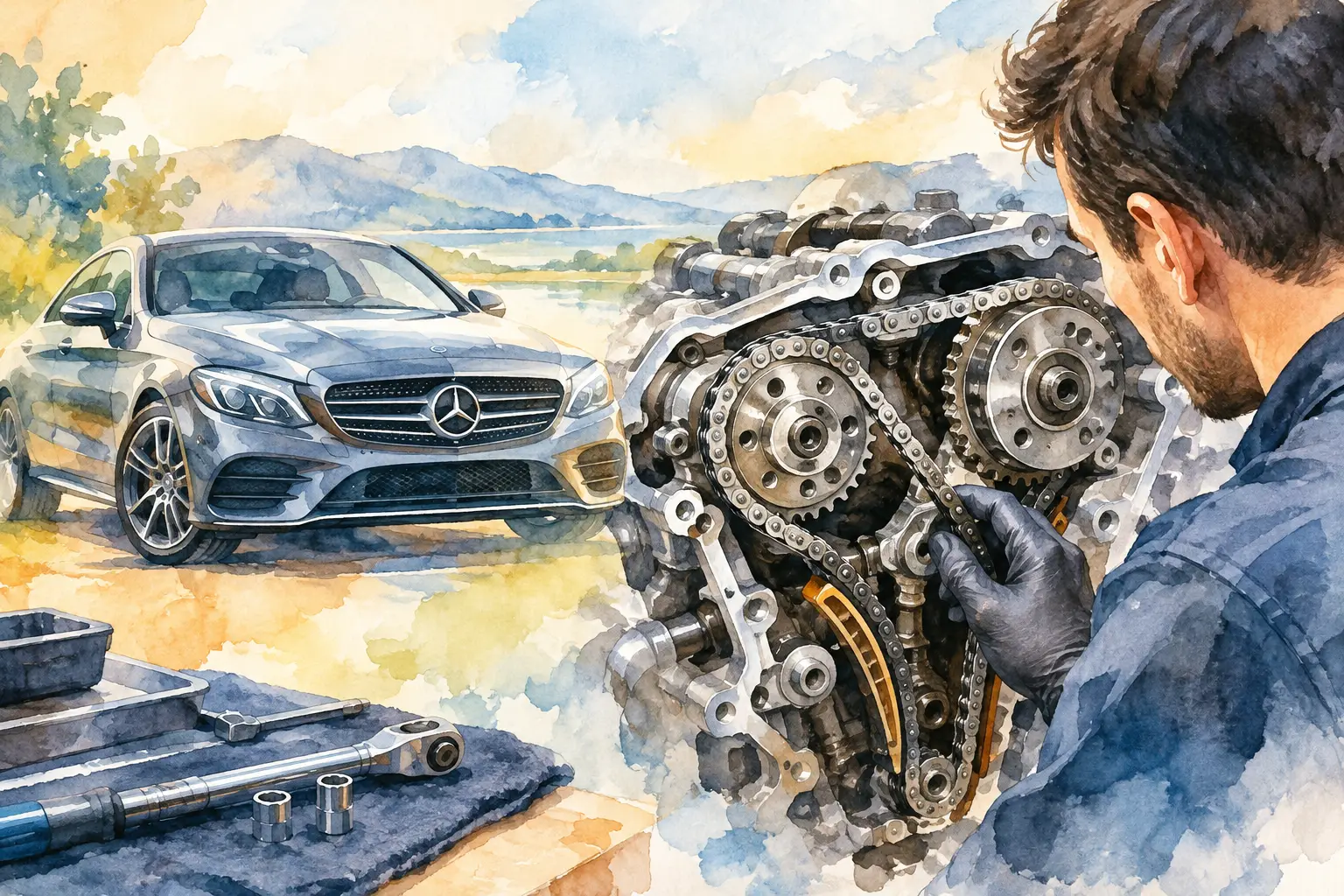
A timing chain problem rarely starts with a dramatic breakdown. More often, it begins with a brief rattle on a cold start, a check engine light, or a Mercedes that no longer feels as smooth and responsive as it should. This Mercedes timing chain inspection guide explains what owners should watch for, what a proper inspection involves, and why model-specific diagnostics matter before authorizing major engine work.
Unlike a maintenance item with a fixed interval, a timing chain is inspected based on engine condition, symptoms, service history, and diagnostic findings. Some Mercedes-Benz engines can deliver many miles of dependable service with their original chains. Others may be more vulnerable to chain wear, guide wear, tensioner concerns, or timing-related faults. The right approach is not guessing or replacing parts on schedule. It is getting clear evidence from technicians who understand the engine in front of them.
What the Timing Chain Does in Your Mercedes
Your Mercedes timing chain synchronizes the crankshaft and camshafts so the pistons and valves operate at precisely the right time. On engines equipped with variable valve timing, it also works alongside camshaft adjusters, sensors, solenoids, guides, and tensioning components that all affect timing accuracy.
When the chain, guides, or tensioner no longer maintain correct timing, the engine control unit may detect a correlation issue between the camshaft and crankshaft. Minor deviations can affect drivability and fuel economy. Severe timing movement can lead to internal engine contact, which is why an unusual timing-related symptom deserves prompt attention rather than a wait-and-see approach.
A chain is not the only possible source of a timing code or startup noise. Oil condition, a weak tensioner, worn camshaft adjuster components, sensor faults, wiring issues, and software-related concerns can create similar symptoms. That is exactly why a real diagnosis is more valuable than replacing a timing chain based on a code alone.
Signs That Call for a Timing Chain Inspection
A brief noise at startup does not automatically mean the timing chain is failing. Still, a repeated metallic rattle, especially after the vehicle has sat overnight, should be evaluated. The tensioner relies on proper oil pressure and condition, so a delayed buildup of tension can create noise that should not be ignored.
Other signs may include a check engine light with camshaft or crankshaft correlation faults, rough idle, reduced power, hard starting, misfires, or a noticeable decline in fuel economy. In more advanced cases, the engine may run poorly enough to enter a reduced-power mode.
Pay attention to timing and pattern. Does the noise occur only on cold starts? Has it become longer or louder? Did a warning light appear after an overdue oil service? These details help a Mercedes specialist separate a developing mechanical concern from a less serious issue.
If the engine is making a persistent mechanical noise, running rough, or displaying a flashing check engine light, avoid continued driving until it has been assessed. Continuing to operate an engine with potentially incorrect valve timing can turn a manageable repair into a much larger one.
Mercedes Timing Chain Inspection Guide: What a Proper Diagnosis Includes
A trustworthy inspection begins with a conversation, not a parts estimate. The technician should review the vehicle’s engine type, mileage, maintenance history, oil service intervals, warning lights, and the exact conditions under which the symptom occurs. Mercedes-Benz has used many engine families across its sedans, SUVs, coupes, AMG models, and Sprinters, so the diagnostic path is never identical for every vehicle.
The next step is a complete fault-code scan using Mercedes-capable diagnostic equipment. Generic scanners may identify a broad code, but factory-level information provides better context, including stored and pending faults, freeze-frame data, actual camshaft values, commanded positions, and other system data that can point toward the real cause.
Technicians then compare camshaft and crankshaft timing values against specifications for that engine. This may include checking adaptation or correlation readings, evaluating live data at idle and different engine speeds, and confirming whether the readings are consistent or intermittent. A scan result is one piece of the diagnosis, not the final answer.
A hands-on inspection may include listening for chain-related noise, checking oil level and oil condition, looking for leaks or contamination, and inspecting accessible components where appropriate. Depending on the engine and symptoms, further testing may require removal of selected covers or components to verify mechanical timing and inspect guides, tensioners, or camshaft-related parts directly.
That level of access is not always necessary. It depends on what the vehicle is doing and what the diagnostic data shows. An honest shop should explain what has been confirmed, what remains possible, and why additional labor is or is not justified before moving forward.
Why Oil Service History Matters
Timing chains are designed to operate in a lubricated environment. Oil does more than reduce friction. It supports tensioner operation, protects chain and guide surfaces, and helps variable valve timing components respond correctly. Low oil level, extended oil intervals, the wrong oil specification, or sludge buildup can increase wear and complicate timing performance.
For Silicon Valley commuters, short trips and stop-and-go traffic can be harder on oil than mileage alone suggests. A Mercedes that spends much of its life in traffic, idling, or making repeated short drives may need closer attention than one that regularly sees longer highway trips. Following the proper Mercedes oil specification and changing it at sensible intervals is one of the most practical ways to support long-term engine health.
That said, excellent oil service does not guarantee that every timing-related component will last forever. Age, mileage, engine design, driving habits, and prior repair history all matter. Good maintenance lowers risk. It does not replace inspection when warning signs appear.
Should You Replace a Timing Chain Preventively?
In most cases, a timing chain is not a routine replacement item like a belt. Replacing it without evidence of wear or a known model-specific issue can mean significant expense and unnecessary disassembly. Timing chain service often involves substantial labor, and related components may need replacement at the same time to avoid repeating work later.
The better question is whether your Mercedes shows measurable timing deviation, repeatable symptoms, visible component wear, or diagnostic faults that support repair. If the answer is yes, addressing the issue early can protect the engine and may limit the scope of the repair. If the answer is no, continued monitoring and proper maintenance may be the sensible choice.
This is where transparency matters. A quality recommendation should distinguish between an urgent concern, a condition to monitor, and a repair that is not needed. Owners deserve a clear explanation, including what evidence supports the recommendation and what could happen if the condition is left unaddressed.
What to Tell Your Mercedes Technician
Bring as much useful history as you can. Mention when the noise occurs, how long it lasts, whether it happens hot or cold, and whether any recent oil service, battery issue, or repair came before the warning light. If possible, a short video of a startup noise can be helpful, particularly when the vehicle behaves normally once it reaches the shop.
Also share previous repair invoices and oil service records. They can reveal whether the correct oil was used, whether timing-related work has already been performed, and whether a recurring issue has a longer history. Good diagnostic work becomes more efficient when the technician has the full picture.
At Mercedes Service of Silicon Valley, our approach is to diagnose the cause before recommending a repair. Factory-trained Mercedes experience, OEM-quality parts and fluids, and advanced brand-specific diagnostics help us provide the clear, practical guidance owners expect without dealership-style guesswork.
A timing chain concern is not something to panic over, but it is not a sound or warning light to dismiss. Schedule an inspection when the first signs appear, keep up with proper oil service, and give your Mercedes the chance to be repaired on evidence rather than assumption.