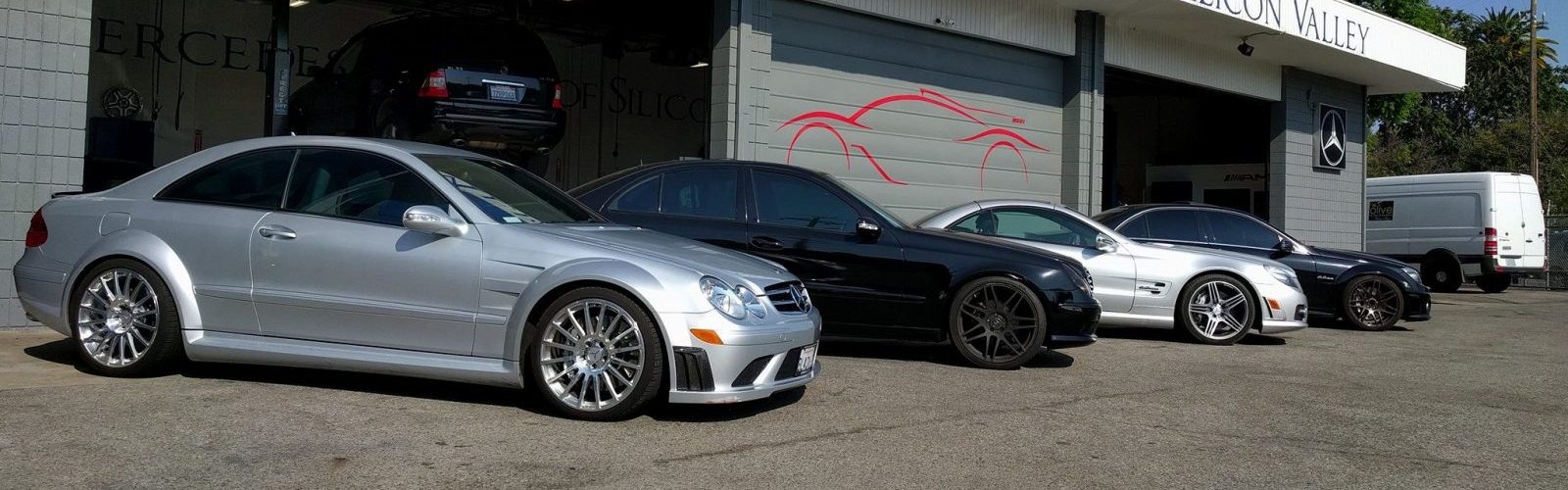

A Mercedes that hesitates when you ask for power does not feel like a Mercedes should. Whether you are pulling into fast Silicon Valley traffic, passing on Highway 101, or enjoying an open stretch of road, immediate and predictable pedal response matters. Learning how to improve Mercedes throttle response starts with separating normal factory programming from a genuine maintenance, drivability, or calibration issue.
Mercedes-Benz engineers often tune throttle behavior for smoothness, fuel economy, traction, and transmission protection. That can make the first inch of pedal travel feel conservative, particularly in Comfort mode. But a delayed response, a flat spot under acceleration, rough shifting, or a warning light is not something to mask with an aftermarket part. The right approach begins with the vehicle’s condition, then considers performance upgrades that suit the model and the owner’s goals.
Start With a Healthy Mechanical Baseline
Throttle response is the result of several systems working together: air intake, fuel delivery, ignition, turbocharging where equipped, engine management, and transmission control. One weak link can make an otherwise well-maintained Mercedes feel slow to react.
Routine maintenance has a direct effect on how crisply the engine responds. A restricted engine air filter limits airflow. Worn spark plugs or a weak ignition coil can cause a subtle misfire under load before a driver feels a major problem. Aging fluids, incorrect fluid specifications, and overdue transmission service can also make acceleration feel less coordinated, especially on vehicles with higher mileage.
For turbocharged Mercedes models, including many late-model C-Class, E-Class, GLE, and AMG vehicles, boost delivery deserves careful attention. A loose charge-air connection, small vacuum leak, worn diverter valve, or leaking intercooler hose may reduce response without creating an obvious drivability failure at first. On direct-injection engines, intake-valve carbon buildup can also affect airflow and part-throttle performance. The appropriate repair depends on the engine family, mileage, maintenance history, and diagnostic results.
Scan Before Replacing Parts
A generic code reader can identify basic fault codes, but it cannot provide the full picture on a modern Mercedes-Benz. Factory-level diagnostics can view manufacturer-specific fault information, live data, adaptation values, sensor readings, boost targets, fuel trims, and transmission behavior.
This matters because an illuminated check engine light is not the only clue. A car may store pending faults or show abnormal data without a dashboard warning. Replacing an air filter, throttle body, or sensor based on a guess can cost more than a proper diagnosis and still leave the original issue unresolved. A Mercedes specialist should confirm whether the concern is mechanical, electrical, software-related, or simply characteristic of the selected drive mode.
How to Improve Mercedes Throttle Response Through Drive Settings
Before modifying anything, test the vehicle in its available drive modes. Many Mercedes models offer Comfort, Sport, Sport+, Individual, Eco, and AMG-specific programs. These settings can change pedal mapping, transmission shift timing, steering effort, suspension behavior, and exhaust character.
Comfort and Eco modes commonly soften initial throttle input and upshift earlier. That behavior can feel like lag when the car is operating normally. Sport or Sport+ usually holds lower gears longer and uses a more direct pedal map, so the engine is closer to its useful torque range when you request acceleration.
Individual mode can be especially useful for daily driving. Depending on the vehicle, it may allow a driver to select a sportier powertrain setting while keeping the suspension or steering in a more comfortable configuration. It is a practical way to get more responsive acceleration without making every commute unnecessarily harsh.
Keep expectations realistic, though. Drive modes alter the relationship between your foot and the throttle request. They do not repair worn ignition components, restore lost turbo boost, or create additional engine output. If the car still feels delayed in Sport mode, it is time for a proper inspection.
Address the Common Causes of Slow Response
When a Mercedes develops a noticeable change in response, the most productive path is to inspect the systems that control air, spark, fuel, and torque delivery. Common causes include:
- Restricted air filters, contaminated sensors, or intake leaks that affect measured airflow.
- Worn spark plugs, failing coils, or fuel-delivery issues that appear most clearly during acceleration.
- Carbon buildup, particularly on certain direct-injection engines with substantial city-driving mileage.
- Transmission adaptation concerns, overdue service, or control-module faults that delay downshifts and torque transfer.
A throttle body may be part of the diagnosis, but it should not be assumed to be the culprit. Electronic throttle systems are closely monitored by the engine control module, and the underlying cause may be a sensor signal, wiring issue, intake problem, or stored adaptation value. Cleaning or replacing parts without testing can create more work without improving response.
Transmission operation is also frequently misunderstood. If the engine revs but the vehicle seems slow to react, the concern may be transmission-related rather than throttle-related. Conversely, a transmission that hesitates to downshift can make a healthy engine feel unresponsive. Correct service with Mercedes-approved fluid and the right procedure is essential. Transmission service intervals and specifications vary by model, gearbox, and production year.
Pedal Controllers: Faster Feel, Not More Power
A pedal controller is often the quickest way to make a Mercedes feel sharper. This device changes the signal interpretation between the accelerator pedal and the engine control unit. With a more aggressive setting, less pedal travel is needed to request the same amount of throttle.
That can be useful for drivers who dislike a soft factory pedal map, particularly on naturally aspirated models or SUVs calibrated for relaxed daily driving. However, a pedal controller does not add horsepower, increase turbo boost, or correct a mechanical fault. It can also make low-speed driving feel touchy, which is not ideal for every driver or traffic condition.
Quality, installation, and vehicle compatibility matter. Any device connected to an electronic pedal system should be selected carefully and installed correctly. If the car already has hesitation, fault codes, or inconsistent acceleration, diagnose it first. An aggressive pedal setting can hide a problem long enough to make the eventual repair harder to pinpoint.
ECU and TCU Tuning: Meaningful Gains When Done Properly
For owners seeking more than a sharper pedal feel, engine control unit tuning can improve throttle response and, on many turbocharged Mercedes engines, increase usable torque and horsepower. A well-developed calibration can adjust throttle mapping, boost targets, torque limits, ignition strategy, and other parameters within a package designed for the specific engine and supporting hardware.
Transmission tuning can complement engine tuning by improving shift speed, downshift logic, torque-management behavior, and gear selection. On performance-oriented Mercedes and AMG models, the difference can be substantial because the engine and transmission are designed to negotiate torque electronically.
The trade-off is that tuning is not a universal answer. Results depend on the vehicle’s engine, transmission, condition, fuel quality, climate, and existing modifications. A proper pre-tune inspection is essential, especially on higher-mileage vehicles. Spark plugs, coils, cooling components, charge-air plumbing, and fluid condition should be addressed before asking the drivetrain to produce more torque.
Software should also be appropriate for the vehicle’s intended use and applicable emissions requirements. Avoid generic files, unknown flash tools, or claims that promise dramatic power with no mention of maintenance, fuel, or drivetrain limits. At Mercedes Service of Silicon Valley, performance recommendations should begin with honest diagnostic findings and a clear discussion of what the vehicle needs, not a one-size-fits-all sales pitch.
Do Not Ignore the Basics After Improving Response
A more responsive Mercedes rewards consistent maintenance. Use the correct OEM-quality filters, fluids, and parts specifications for your VIN. Follow service intervals that reflect how the vehicle is actually driven, not only the minimum schedule. Frequent short trips, hot weather, heavy traffic, spirited driving, and modified output can all justify a more attentive maintenance plan.
Fuel quality matters as well. If your Mercedes requires premium fuel, using the recommended octane helps the engine management system maintain its intended ignition timing and performance. A tune may have specific fuel requirements, so those instructions should be treated as part of the modification, not an optional suggestion.
The best throttle response is not necessarily the most aggressive setting. It is a Mercedes that reacts cleanly, shifts predictably, runs within its intended operating range, and remains enjoyable every time you drive it. Start with accurate diagnostics, restore the mechanical baseline, and choose upgrades that match how you use your vehicle.