A warning light appears on your Mercedes-Benz dashboard, your suspension feels different on Highway 101, or your service reminder is due. The best questions for a Mercedes mechanic help turn an uncertain appointment into a clear conversation about your vehicle, your budget, and what actually needs attention. A qualified specialist should welcome these questions. Clear answers are part of quality service.
Mercedes vehicles are engineered with tightly integrated mechanical, electrical, and safety systems. That makes the right diagnosis more valuable than a quick guess or a generic repair recommendation. Whether you drive a C-Class commuter, a GLE family SUV, an AMG, or a Sprinter, asking informed questions helps you protect the ownership experience you bought the vehicle for.
Start With Experience and Diagnostic Capability
Before discussing a repair, find out whether the shop works on Mercedes-Benz vehicles regularly and whether its technicians understand your specific platform. Mercedes service requirements can vary significantly by model year, engine, transmission, drivetrain, and available driver-assistance equipment.
“How familiar are you with my model and its common issues?”
This is not about looking for a mechanic to recite internet forums. It is about learning whether the technician has firsthand experience with the systems in your vehicle. A shop that specializes in Mercedes-Benz should be able to discuss relevant maintenance patterns and known concerns without assuming that every vehicle will have the same problem.
For example, an intermittent electrical issue in a newer E-Class may require a different diagnostic process than an air-suspension concern in an older S-Class or a cooling-system repair on an AMG. Experience helps a technician test the likely causes efficiently, but the final recommendation should still be based on the condition and fault information from your individual vehicle.
“What diagnostic equipment will you use?”
Mercedes-Benz diagnostics go far beyond reading a basic trouble code. Modern vehicles communicate through multiple control modules, and a warning light can be triggered by a sensor, wiring issue, software condition, mechanical failure, or a problem elsewhere in the system.
Ask whether the shop uses genuine Mercedes diagnostic equipment or manufacturer-level systems capable of accessing all relevant modules, live data, service functions, and adaptations. Proper equipment supports accurate troubleshooting, coding when required, and a repair process that does not create new issues after the original problem is addressed.
Ask for a Diagnosis Before Approving Repairs
A repair estimate should make sense in plain language. You do not need to be an automotive engineer to understand what failed, why the recommended repair addresses it, and how urgent the issue is.
“What did you find, and how did you confirm it?”
A trustworthy answer describes the evidence. That may include fault codes, test results, visual inspection findings, fluid leaks, component wear, or road-test observations. If the diagnosis is still preliminary, the shop should say so and explain what additional testing is needed.
Be cautious of a recommendation based only on a warning light or a symptom description. A code identifies a system that needs attention, not always the precise part that must be replaced. Replacing parts by trial and error can become expensive quickly, especially on a Mercedes.
“Can you show me the failed or worn component?”
When practical, ask for photos, video, or a walk-around explanation. A cracked bushing, oil leak, worn brake pad, damaged tire, or failed engine mount is often easier to understand when you can see it. Not every concern is visible, particularly internal electronic or software-related faults, but the technician should still be able to explain the test results clearly.
Good communication matters because Mercedes repairs are often interconnected. A leaking valve cover, for instance, may be more than an oil smell. Depending on its location and severity, oil can affect nearby wiring, ignition components, or other parts that need inspection.
Separate Urgent Repairs From Planned Maintenance
One of the most useful questions is also one of the simplest: “What needs to be done now, and what can I plan for later?” A professional shop should prioritize safety, reliability, and the risk of secondary damage rather than treating every observation as an emergency.
“What happens if I wait on this repair?”
The answer helps you make a sound decision. A brake issue, major fluid leak, overheating concern, tire damage, or safety-system warning may require immediate attention. Other items, such as early suspension wear or a minor seepage, may be safe to monitor for a period of time.
There are trade-offs. Waiting can be reasonable when the condition is minor and the vehicle is operating safely. But delaying a cooling-system repair, for example, can lead to overheating and far more significant engine damage. Ask for the likely consequence, not just a yes-or-no answer about urgency.
“Does this service follow my vehicle’s maintenance schedule?”
Mercedes maintenance is not one-size-fits-all. Service intervals depend on the vehicle’s age, mileage, operating conditions, and onboard maintenance information. A Silicon Valley commute with frequent stop-and-go traffic may place different demands on brakes, tires, batteries, and fluids than mostly open-highway driving.
Ask which maintenance items are due now, which are recommended based on condition, and which can wait until the next interval. That distinction is a practical defense against both neglect and unnecessary upselling.
Discuss Parts, Fluids, and Repair Standards
The quality of a repair depends on more than the labor itself. Mercedes-Benz components are designed to work with specific materials, tolerances, and electronic systems. The lowest-priced option is not always the best value if it compromises fit, longevity, performance, or system operation.
“Will you use OEM parts and Mercedes-approved fluids?”
OEM parts and approved fluids provide a dependable baseline for most repairs and maintenance. Ask what part brand will be used and why. There are cases where a high-quality aftermarket component may be appropriate, but the choice should be transparent and matched to the repair.
This matters especially for items such as filters, ignition components, sensors, suspension parts, transmission fluids, and brake components. An incorrect fluid specification or a poorly made sensor can cause avoidable faults, reduced performance, or repeat visits.
“Is there a more cost-effective option that still meets the right standard?”
Budget-aware does not mean cutting corners. A good Mercedes specialist can explain whether there are sensible choices based on your vehicle’s age, mileage, and long-term plans. For a well-maintained late-model vehicle, OEM may be the clear answer. For an older daily driver, an alternative may make sense in limited situations.
The key is to avoid vague language. Ask what the option changes in terms of warranty, expected service life, performance, and fitment. You should never have to choose between a dealer-priced repair and an unknown part with no explanation.
Get Clear on Cost, Timing, and Authorization
Unexpected repairs are frustrating. They are much easier to manage when the estimate separates diagnosis, parts, labor, taxes, and any recommended additional work.
“What is included in this estimate, and what could change?”
Some repairs require disassembly before the full scope is known. A technician may identify additional worn parts once access is gained, particularly with suspension, engine, or oil-leak repairs. That is normal. What matters is whether the shop contacts you for authorization before proceeding beyond the approved work.
Ask whether the estimate includes diagnostics, programming, shop supplies, fluids, and post-repair testing. A complete answer prevents surprises and makes it easier to compare value, not just a single number.
“How long will the repair take, and can I drive the vehicle meanwhile?”
Parts availability, diagnostic complexity, and required programming can affect the timeline. Ask for a realistic expectation rather than a promise that sounds convenient. If your vehicle is unsafe to drive, the shop should explain why and help you understand the immediate next step.
For routine maintenance, scheduling can often be straightforward. For complex electrical diagnosis or performance work, the right approach may take longer because testing is necessary before parts are ordered or installed.
Questions for AMG and Performance-Minded Owners
If your Mercedes has performance modifications, or you are considering tuning, the conversation should go beyond horsepower figures. Ask whether the vehicle’s maintenance status and baseline health have been checked first. Tuning a car with active faults, weak ignition components, cooling problems, or transmission concerns is not a responsible starting point.
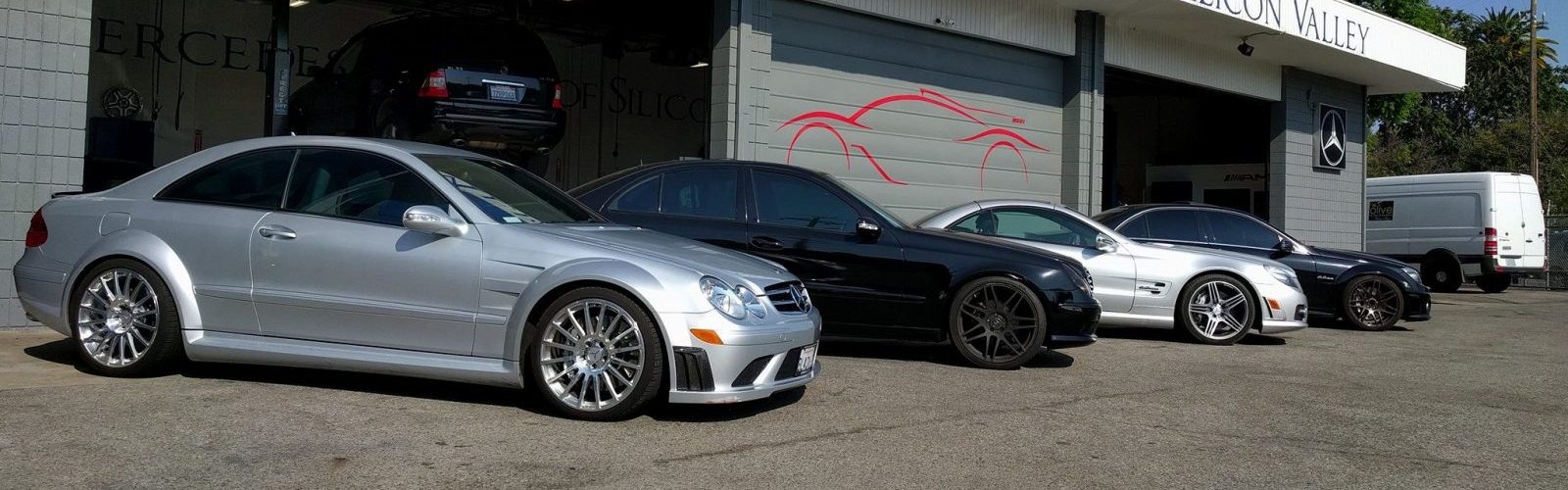
Ask how the modification affects service needs, drivability, emissions compliance, warranty considerations, and supporting hardware. At Mercedes Service of Silicon Valley, performance conversations are approached with the same discipline as repair work: understand the vehicle, use the right equipment, and make recommendations that fit the owner’s goals.
Bring the Right Information to Your Appointment
You will get better answers when you bring clear details. Note when the symptom occurs, whether it happens cold or warm, what warning messages appear, and whether any recent service or repairs were performed. A short video of an unusual noise can be especially useful when the problem is intermittent.
Also mention your driving priorities. If you are preparing for a road trip, commuting daily between San Jose and Fremont, keeping a vehicle for many years, or planning to sell it soon, those facts can change the most practical recommendation.
The right mechanic will not pressure you to memorize technical terms or approve work you do not understand. Ask direct questions, expect direct answers, and choose service that gives you confidence every time you turn the key or press the start button.